
Rapid Refund
Jump the queue, get 50% paid upfront
Average Claim £3,000
We'll tell you straight away what you're owed

Free to enquire
It's free to find out if you have a claim
No Hidden Costs
All aftercare is included
We've collected the answers to the most common questions we get here. If your question isn't answered, or if you just prefer to talk to a real person right away, you can give us ring, use the Live Chat here on our site, join us on Facebook or send us a message for help.
Most likely, yes. The amounts you receive don’t normally cover everything you’re entitled to.
It is important to know that we deduct HDT or GYH allowances from any claim we make as both are paid non-taxed.
Use our Tax Refund Calculator to find out if you are owed anything from HMRC
If you live in married quarters, on or off base, and spend your leave periods there, it would normally be classed as your main residence. The claim in this case would be for any costs for travel between your married quarters and any temporary postings of up to 24 months.
If you already receive a Home to Duty (HDT) allowance for this already, we will review the amounts received against the allowable limits and claim for any shortfall.
Use our Tax Calculator to see if you are owed a refund from HMRC.
If you live on base part of the time but go home to another address for weekends or longer periods of leave, the leave address would be classed as your main residence.
A tax refund claim in this case would be for travel between your home address and your workplace.
If you already receive a Get You Home Travel (GYH) allowance for this, we will review the amounts received against the allowable limits and claim for any shortfall.
Use our Tax Calculator to find out if you are due a refund.
Yes this is very important as we need to have documentary evidence to support your claim.
Please ensure you keep a copy of each of your Assignment Orders for each base that you have traveled to. You can print these from JPA but please note these are deleted after 60 days.
See our checklist of the documents you will need to make a claim. We can help you get copies of anything you are missing if needed.
It will depend on the type of training.
HMRC has strict rules about what is classed as an allowable expense around training. If it was an essential part of your contractual duties of employment then we might be able to claim for the traveling expense or mileage.
You will need to have completed your phase one training to make a claim.
Even if you not due a refund this year remember that you can claim for the past 4 tax years so use our tax calculator to find out if you are owed anything.
To get a tax refund, HMRC says you need to be travelling to temporary workplaces. Reservists and Territorial Army personnel tend to spend most of their service in one place, which wouldn't qualify and is an example of when you wouldn't be able to claim an MOD tax refund.
That said, your circumstances might be different from most. Get in touch if you want us to look into it for you. It costs you nothing to find out where you stand.
Use our tax calculator to see if you are due a refund
Find out if you need to complete a Self Assessment Tax Return or if you can claim Flat Rate Expenses.
Yes. You are legally entitled to reclaim 24p per mile, which is the difference between the HMRC allowed rate of £0.45 per mile* and the MOD £0.21 per mile tax exempt allowance. To claim this, you must be on temporary duty. This is defined by the relevant HMRC legislation, not by MOD policy.
HMRC mileage refunds explained
Ask RIFT about your specific circumstances if you are still unclear.
*HMRC EIM32080 Travel expenses: travel for necessary attendance: temporary workplace: limited duration, the 24 month rule.
Despite what some people are saying, MOD personnel really can get UK tax refunds. RIFT Refunds always knew this was true and we fought hard to get the proof. You can read the MOD letter to us and feel assured that this is something that can be legitimately claimed for.
Tax refunds for travel can be claimed, as confirmed in DIN ‘2015DIN01-005’ which has been issued to all service personnel to officially confirm this.
There has been a lot of confusion around tax refunds that RIFT has worked hard to clear up with both the MOD and HMRC.
Different interpretations of what is meant by ‘a temporary posting’ have caused this confusion. Some believed that individuals who claimed a tax refund on HDT were doing so in breach of HMRC rules. RIFT can categorically confirm that none of these potential situations can arise and this is confirmed by the MOD.
Some also thought that making any claim for a tax refund may mean the individual may have to repay rebated money in the future. Others also thought claiming a refund would jeopardise the whole tax exemption of the MOD HDT allowance, disadvantaging many service personnel.
Others were worried about changes to tax codes. Your tax code should not change due to a refund claim but any problems with your tax code are covered in our aftercare service which means we will get any errors fixed for you at no extra charge. Read more about tax codes and how to check if yours is correct.
DIN ‘2015DIN01-005’ has been issued to all service personnel to officially confirm that tax refunds for travel are claimable.
It also states that you can use an agent to make a claim for you. RIFT will act as your agent, providing an end to end service if you don’t have the time or are not comfortable dealing with the technical legislation set out by HMRC.
This supports the previous formal confirmation we received from the Ministry of Defence.
Just like anyone else, you're entitled to a UK tax refund for travel expenses to and from temporary workplaces. If you're making your own way from a UK residence, you could have a pretty big refund on your hands. Watch out, though - if your family has moved abroad with you, then your main residence might be outside the UK. In that case, you can't claim for your travel costs.
Find out everything you need to know about paying UK tax if you work overseas or get in touch.
Yes, if this is classed as your main residence.
The legislation for tax refund claims is based on costs for travel expenses on to temporary postings of under 24 months, even outside the UK, using either your own vehicle or public transport counts.
If you're in the Armed Forces and making your own way to more than one base, you can claim any overpaid tax on the cost of that travel for the last 4 years, and the RIFT average 4 year rebate is £2,500.
HMRC takes a big enough bite out of your pay already. Don't let them hold onto cash that's supposed to be in your pocket. Use our tax calculator to find out if you are owed anything back.
No, laundry costs are included in your annual personal allowance (i.e. the amount you can earn tax-free each year). This will be recorded in your tax code.
You may be able to claim if you have the receipt and it is in the last four tax years as it is a work related expense.
Use our tax calculator to find out if you are due a refund.
Yes, the cost of flying varies considerably so we need evidence of your actual expenses for HMRC. We can only claim for the actual flights you made, not the cost of any flights between two destinations.
Have a look at our checklist of the documents or paperwork we'll need for your claim.
You can download all your wage slips from the JPAC website.
Under HMRC legislation a posting that is more than 24 months is deemed permanent and therefore the temporary workplace rules don’t apply. However, we would review every case in isolation as we would need to understand your expectation at the outset of your posting.
As you can claim for the previous 4 years even if you have been at your current base for over 24 months you may be able to claim for previous postings.
Use our Tax Calculator to work out if you are due a refund.
We need the following information to assess your MOD tax refund and then hopefully process your claim:
See our full document checklist and what to do if you are missing anything.
Other information – We’ll ask you a few simple questions about your financial circumstances e.g. if you have any other sources of income such as rental income, whether you have a student loan or a private pension that may affect your claim, your tax code or mean that you need to submit a self assessment tax return.
The MOD accommodation rules may also have an impact so we will need to understand your living arrangements. This helps us calculate the value of tax you’ve overpaid.
Use our Tax Calculator to find out if you are due money back.
Armed Forces uniform tax rebates are handled differently from most other professions. Generally speaking, your uniform maintenance costs are handled through your tax code. Basically, your tax-free Personal Allowance gets ratcheted up a few notches to make up for what you're shelling out.
The taxman likes to be kept up to date on any income you’re earning, but he’s not some crazed stalker prying into every aspect of your private life. Gifts from your parents or friends, student loans and grants don’t count as taxable income in HMRC’s eyes. The same goes for bursaries, scholarships and so on.
Yes. If you’re renting out a room while you’re studying, then the taxman will want his bite of it. As always, any Personal Allowance you’re entitled to applies. You’ll probably end up filing Self Assessment tax returns to account for the income. However, depending on what you’re renting out, you might be able to use the Rent a Room scheme. Under Rent a Room, you can earn up to £7,500 tax-free a year from renting out furnished accommodation in your main home. Rent a Room is simpler for most people than working out their expenses in their tax returns. As long as you qualify for it, it can be a decent way to score some extra income.
Visit our guide to tax on rental income.
Apprenticeships are a lot like training contracts, in that you’re working primarily to learn a trade or set of skills. However, apprenticeships are paid positions. That means you’ll be taxed through the PAYE system. Depending on how long your apprenticeship lasts, you might find yourself claiming back some PAYE tax from HMRC (if it’s less than a full year, for instance). Also, unless your employer’s paying or reimbursing all your expenses (travel to temporary workplaces, tool/equipment repair, and so on), you might be owed some tax back for those, too.
Tax breaks are another term for tax relief. HMRC has various systems in place to help people and businesses bring down the tax they're paying under certain circumstances. For example, when you're reaching into your own pocket for things like travel to temporary workplaces, you can claim back some tax on your mileage expenses. Everything from individuals washing their work uniforms to businesses conducting cutting-edge R&D can qualify for some kind of tax relief. The key to getting the best from these systems is to know exactly what you qualify for, and how to claim it back.
If you're self-employed and paid through the Construction Industry Scheme (CIS), you're probably due a tax refund.
You can also claim back a range of job-related expenses, including travel, meals, lodging, parking, tolls, tools, protective clothing, public liability insurance, phone bills, postage and stationery.
We’ll assess all your expenses and include them if they qualify. That way you'll be certain that everything on your claim is a genuinely allowable expense and you won't find HMRC knocking on your door asking for their money back. If you're a RIFT customer, you'll be covered by our RIFT Guarantee as well, so you've got even more peace of mind.
Sadly there are a number of unscrupulous tax refund advisors taking advantage of CIS workers at the moment.
If you want to see how much you could be due back from HMRC use our CIS Tax Calculator and find out in seconds.
Find out more about the Construction Industry Scheme (CIS) and how to register if you need to.
Read our guide to CIS and Self-Assessment
Yes it does. All self-employed people, including CIS workers, have to complete a tax return every year. The tax year ends on 5th April and you’ve got until 31st January the following year to send your tax return to HMRC.
Read more about Tax and the Construction Industry Scheme
At RIFT we complete your tax return for you, and claim your tax refund at the same time. Just tell us where you’ve worked, and when, and we’ll work out the cost of your travel. We’ll add any other job-related expenses you may have and fill in the tax forms for you, all you need to do is sign them.
We’ll send the forms to HMRC, handle any questions on your behalf and chase them if they don’t pay out in the agreed timescale – it’s all part of our service.
95% of our CIS customers get a tax refund, and the average value of the refunds is £1,705 per year.
Read our guide to CIS and Self-Assessment
Use our CIS tax calculator to find out how much you could have waiting for you at HMRC.
CIS tax rebates generally take about 4-10 weeks for HMRC to process. RIFT’s CIS refund service includes handling your Self Assessment CIS tax return and full aftercare throughout the year, with no hidden prices. With RIFT, you get the very best from your claim, as fast as possible and with no expensive hourly rates to cough up. One simple fee takes care of everything.
HMRC’s not known for its blistering speed, but there are a few things you can do to keep the wheels turning on your claim:
RIFT’s expert teams will make sure there's no hold-up at HMRC. That means no endless waits on HMRC helplines and no dangerous mistakes creeping into your claim. We'll even chase up old employers if they're dragging their feet in sending the information we need. Once you’re happy with the amount we’ve calculated for your rebate, we’ll chase up HMRC until it’s paid out in full. Meanwhile, we take expert care of you all year round, and we’re never more than an email or phone call away. As always, everything's covered by our RIFT Guarantee. As long as you've given us complete and accurate information, your rebate is protected.
Find out more about the Construction Industry Scheme (CIS) and how to register if you need to.
When you file your own Self Assessment tax returns, it's easy to miss out on CIS claims or make costly mistakes. Under the CIS scheme, your employer takes tax directly from your pay before you get it. This almost always means you're instantly losing 20% to the taxman. As a result, you’ll probably find you’ve been overcharged by HMRC when you file your Self Assessment tax return.
It takes specialist understanding to claim tax back for CIS construction workers. Every year, far too many people are still shelling out tax they don't owe. In the worst-case scenario, they don’t get any CIS tax rebate at all. Even if they do, it’s often nowhere near as much as they deserve.
Yes! All self-employed people, including CIS workers, have to complete a yearly Self Assessment return. The tax year runs until on 5th April, then you've got until the following 31st of January to complete and file your tax return.
Find out more about the Construction Industry Scheme (CIS) and how to register if you need to.
Read our guide to CIS and Self-Assessment
With RIFT, filing and completing your CIS tax return is all part of our tax rebate service. Armed with a list of your workplaces for the year and a few more details, we'll work out the cost of your travel and what you’re owed for it. Next, we'll add any other essential expenses you’ve had and sort out your paperwork.
We'll send the forms to HMRC, handle any questions on your behalf and keep chasing the taxman until your rebate’s paid. 95% of our CIS customers get a tax refund, with an average value of over £1,705 per year.
The taxman really doesn’t like waiting. Miss the filing or payment deadline by a single day and you'll get an immediate £100 penalty. At 2 months late, that fine doubles. At 6 and 12 months late, it reaches £300 (or 5% of the CIS deductions on the return, if that's higher). Any longer and you might face an additional penalty of £3,000, or 100% of the CIS deductions on the return.
Of course, with RIFT on your team, you’ve got nothing to worry about. We’ll keep you in the taxman's good books and make sure you never miss out on your CIS tax claims - even the ones you didn’t know you qualified for!
Find out more about the Construction Industry Scheme (CIS) and how to register if you need to.
You’ll need a few bits of information about yourself to register for the Construction Industry Scheme:
The CIS scheme covers most of the construction work done in the UK. If you’re self-employed in the building trade, you’ll almost certainly have to register for it. Contractors will need to verify their subcontractors, handle their CIS deductions and file monthly CIS returns.
If you’re a subcontractor and don’t sign up for CIS, it doesn’t mean you won’t have the deductions taken from your pay. In fact, you’ll probably actually lose even more of your money, since the rate goes up to 30% for people who aren’t CIS-registered. It’s possible that you qualify for “gross payment” status, where you don’t have to pay CIS deductions. Don’t count on that, though, as there are specific rules and conditions to meet.
One of the problems with CIS is that it's very easy to end up paying too much - and you won't get an automatic refund. To claim your CIS rebate, HMRC demands proof of what you’re owed. This is what RIFT Tax Refunds is all about, so get in touch to see how we can help.
If you are currently working PAYE (on the books) and need to switch to CIS we can help you.
Remember that CIS covers all UK construction work, even if it's done by foreign firms. There are penalties for filing late, so you have to stay on top of the paperwork.
Find out more about the how to register for CIS if you need to.
When you register with the Construction Industry Scheme, you get a card. The kind you’re given depends on your situation:
Find out more about the Construction Industry Scheme (CIS) and how to register if you need to.
For most general contractors in the UK building trade, the CIS scheme's compulsory. It includes everything from site preparation and repairs to decoration and demolition. There are a few exceptions, though. For instance, if you’re a contractor who only deals with very limited sections of the work (like carpet fitting), you may not have to register.
Find out more about the how to register and who needs to.
CIS covers all construction work done in the UK, even when it's done by foreign firms. The registration system is a little different, but all the basic rules are the same. The UK has some ''double taxation'' agreements in place with various other countries to reduce your total tax when you're paying in both countries. Talk to RIFT if you need help working out what it all means for you.
Read our guide to CIS and Self Assessment
The standard Construction Industry Scheme tax deduction is 20%. If that sounds like HMRC's taking a huge lump out of your pay, then it only gets worse if you don’t sign up to the scheme. If you haven’t registered, the rate shoots up to 30%! This can also happen if you don't give your employer your Unique Taxpayer Reference number (UTR). Your UTR is used by HMRC to identify you. If your employers don't have it, the taxman might assume you aren't registered for CIS and charge you the higher rate.
Find out more about the Construction Industry Scheme (CIS) and how to register if you need to.
CIS tax deductions are payments your employer takes out of your wages before you get them. Those payments go straight to HMRC instead of you. They're supposed count as advance payments toward your tax and National Insurance, clamping down on tax evasion in the industry. Unfortunately, one of the side-effects of CIS is that a lot of honest people end up being charged too much tax. At RIFT, our friendly teams of CIS experts can quickly tell you if you're due a tax rebate, then make sure you get it.
Find out more about the Construction Industry Scheme (CIS) and how to register if you need to.
A Construction Industry Scheme Payment and Deduction statement is a record of the money you've been paid and taxed on if you work under the CIS scheme. You might also just call them wage slips, payslips or something similar.
If you're self-employed in construction, they're some of the most important documents you'll ever have. When you file your yearly CIS tax return, you'll need these statements to prove what you've earned and paid. You should get a CIS Payment and Deduction statement from your boss whenever you’re paid, within 14 days of the end of the tax month.
The main thing you'll need your CIS certificates or wage slips for is filing your yearly Self Assessment tax returns. The taxman will expect you to show him a record of all the cash you’ve got coming in. With the CIS taking 20% of your pay before you get it, you’re probably not getting the full benefit of your tax-free Personal Allowance. You’ll be hard-pressed to prove that without your CIS paperwork to back up your claim, though.
Find out more about the Construction Industry Scheme (CIS) and how to register if you need to.
Read our guide to CIS and Self-Assessment
Employment status is a huge issue in construction, and it can get very complicated with so many layers of contractors, subcontractors, agencies and so on. You might think you’re working under exactly the same conditions as your PAYE workmates, but the taxman could well take a different view.
The first thing to do is check your payslips. If they say “CIS statement” and show 20% deductions being made, then you’re being taxed through CIS. If that seems wrong, you need to talk to your employer fast.
The CIS scheme is only for construction, and its rules can catch out even experienced self-employed people from other industries. If you’ve got self-employed mates from outside of construction, be careful taking Self Assessment advice from them. They might not know the territory as well as they think they do. Play it safe and talk to the experts at RIFT instead.
In construction, a contractor is a person or business supplying materials or labour for a job. On the other hand, a subcontractor is anyone who does construction work for a contractor. Basically, according to HMRC, you're a contractor if you pay subcontractors for construction work.
You can also count as a construction contractor if your business doesn't do construction work, but still spends an average of over £1m a year on construction in any 3-year period. Either way, you’ll need to register for CIS and start taking deductions from your subcontractors’ pay.
Find out more about the Construction Industry Scheme (CIS) and how to register if you need to.
Start My Claim
As a contractor, you need to register for CIS before you even take on your first subcontractor. You're going to have a lot of responsibilities under the scheme, so get used to minding the details. Here's what you need to do:
Subcontractor tax refunds can be tricky. It’s easy to miss out on money you’re owed - or even get put off from claiming altogether. Even pricey accountants can find themselves tangled up in the system if they don't know the construction industry well. RIFT Tax Refunds has been specialising in construction rebates since 1999. There really are no safer hands to be in.
Gross payment status means that no CIS deductions get taken out of your pay. There are 3 basic tests to see if you qualify:
Yes, you will pay tax “at source” (your tax is taken off your wages before you get them), most likely at the rate of 20% of your income.
However, this doesn’t mean you are “employed”. You still count self-employed under CIS – even if it doesn’t feel like it. The big difference is that this means you'll still have to do Self Assessment each year. Not filing those tax returns each year brings three very serious problems your way:
If you're getting CIS statements and don't understand why, get in touch with RIFT straight away. We can explain the system, make sure you aren't paying too much tax and keep you out of trouble with HMRC.
Find out more about the Construction Industry Scheme (CIS) and how to register if you need to.
There are strict rules for CIS contractors about payment and deduction statements. They need to send you one every time you're paid, with specific deadlines to hit.
If you haven't been receiving yours, don't panic. It may just be a simple admin mix-up. Get in touch with your contractor and ask for your certificates, so you can keep your Self Assessment records up-to-date.
Don't just ignore the problem. If it turns out your contractor's not been doing things correctly with HMRC, things could get awkward for you in a hurry, come the end of the tax year.
You will need the statements to submit your tax return, read our guide to CIS and Self-Assessment
If you still have no luck, come to RIFT for advice and help. We're experts in sorting out tax problems for UK construction, and we'll get straight to work.
If you're self-employed in any kind of business, you'll almost certainly be using Self Assessment to pay your tax. In the construction industry, you'll probably also have to deal with the Construction Industry Scheme (CIS). Subcontracting under CIS means your Self Assessment filing has a couple of extra points to consider. If you don't understand the system, it's easy to end up paying a lot of extra tax you don't owe. If you think you are due a tax rebate check out our CIS tax refund pages.
Self-employed CIS workers can sometimes pass work on to other people. However, there are strict rules about doing this, and breaking them can lead to serious trouble. HMRC has a real problem with people in CIS work paying cash-in-hand for others to do jobs for them. It doesn't matter if you're passing the work on to friends, colleagues or family. You still have to follow the rules.
Read more about the Construction Industry Scheme (CIS) and how to register if you need to.
The first thing to know is that passing your CIS work on makes you a contractor in HMRC's eyes. That means you have to register yourself to avoid serious trouble from the taxman. You can't just slip someone a fistful of banknotes on the sly and sort things out later. You need get yourself registered before you take on your first subcontractor.
After that, you need to be sure your subcontractors are signed up for CIS. When you pay your subcontractors, you have to take CIS deductions from their pay and send them to the taxman. You'll also need to file returns every month and keep detailed CIS records. If you slip up, or ignore the regulations altogether, you're looking at some painful penalties.
Find out more about the Construction Industry Scheme (CIS) and how to register if you need to.
As long as you're following the rules, then the cash you're paying the people you give the work to counts as an expense. That means it will bring down the amount of profit you're paying tax on. If RIFT is handling your tax returns, of course, we'll handle all of this for you as part of the service.
If you've been passing some of your CIS work on, then you need to have good records to show the taxman. HMRC will expect to see detailed evidence of the wages you've paid out, for instance. In addition, they'll also want to see the details of the people doing the work for you. Names, addresses and their Unique Taxpayer Reference numbers will all be needed. Again, RIFT will handle all the sticky HMRC business for you to keep you within the regulations and out of trouble.
RIFT was first founded to help construction workers tackle the taxman. We've grown a lot since then, but we always remember where we started. We're still the leading experts on taking care of the UK's construction industry. We're on great terms with HMRC, and know the business inside and out. Whatever tax problems or questions you've got, talk to RIFT.
Read more about the Construction Industry Scheme (CIS) and how to register if you need to.
The first thing to understand about healthcare tax refunds is that not every mile you travel or pound you spend will count toward your claim. A daily commute to a permanent workplace, for example, won’t earn you any tax relief. To qualify for a refund, your work travel needs to be to and from what HMRC calls “temporary workplaces”. In practice, this generally means anywhere you work for less than 24 months. So, for example, a nursing job that requires you to travel out to patients’ homes could end up making you eligible for a pretty decent tax refund. Meanwhile, travel expenses can also include some subsistence costs while you're on the move. Things like accommodation and food can all contribute toward your claim.
There are also a few tricky points to consider. If you're travelling to a number of hospitals or clinics within the same general area, with your mileage and travel times not changing much, HMRC might consider the entire region your “permanent workplace”. It's always best to get professional advice in situations like these.
Rotational contracts, where you're working full-time at a series of hospitals over a period of years usually won't qualify. However, if your training takes place under, for example, a single 5-year contract, then things changes. In that case, each hospital you work at will count as temporary because it's a single employment with multiple temporary workplaces. The regulations are easy to trip over here, so it's often a good idea to get professional help.
If you're already getting some of your costs reimbursed by your employer, you may still be owed tax back. HMRC has set rates for Approved Mileage Allowance Payments (AMAP), and if you're not getting the full amount you can claim back the difference. The NHS has its own rates as well, if you're employed by them.
Beyond travel, there are several more ways a job in healthcare can cost you money. If you’re paying out of your own pocket for repair, replacement or even laundry of your work uniform, for instance, you could make a claim for those costs. The same goes for union dues and professional body fees to organisations like the Nursing and Midwifery Council.
The key points to remember are that the costs you’re claiming tax relief for need to be essential to your work, and you need to be paying them yourself. In addition, to get back everything you’re owed you’ll need to show proof of what you’re spending. That means records and receipts – although the simplified Flat Rate Expenses system can offer an easier way if you don’t mind sticking to HMRC’s figures.
If you find yourself buying things like laptops or office equipment for work use, you might have a claim under HMRC’s capital allowances system. This is generally for items that you’ll be using for a couple of years or more – and again, you’ll need to be footing the bill yourself for them to qualify for tax relief.
Our standard charges are:
When we receive your refund from HMRC we take out our fee and then pay it the refund to you. There are no up front charges to pay for anything. If you are not due a refund then there is no charge.
Before we send your claim to HMRC we sent a copy to you with a full breakdown of all the fees so you can clearly see:
You will need to sign and send this back to us to say you have read, understood and agreed with it, along with a declaration that all the information you have provided about your claim is true. This means you will never be charged any fees you have not agreed to.
There are no further fees to pay, and no hidden charges.
All aftercare is included (if you need us to call HMRC on your behalf, if you have a problem you would like us to resolve with them, if your tax code needs correcting etc).
Your refund is covered by the unique RIFT Guarantee which means that whatever happens, your refund stays in your own pocket and will never go back to HMRC. If we fight any HMRC enquiries for you (still included in the cost) and if anything did go wrong (which it never has in 15 years) we would pay back the refund to HMRC ourselves.
We will also send you a reminder when it's time to see if you have a claim next year.
Does it apply to me?
The short answer is "yes".
While many people get their travel and work expenses reimbursed by their employers those in the Armed Forces, Construction Trades, Security and Offshore industries often don't.
To get the money back you have to put in a claim to HMRC to show what you've spent so they know how much to pay you back.
Sadly many people, 2 in 3, who are owed tax refunds don't claim them back - meaning they are losing a chunk of their wages.
It's our mission to improve knowledge about this so that all workers who should be claiming are claiming.
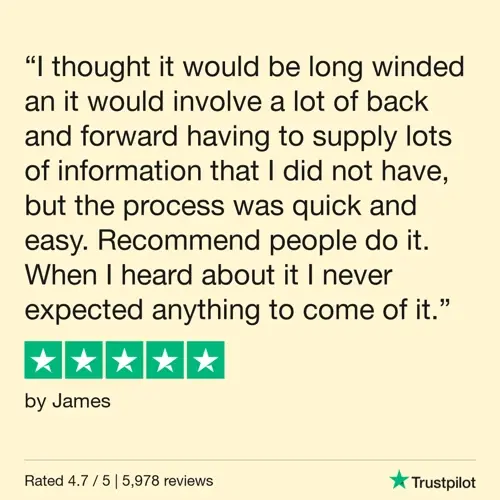
We know what it's like - time flies and it's hard to find a moment to get round to things.
The good news is, we take care of everything for you - the whole reason we do what we do is to take the stress off your hands and give you time back as well that hard earned cash.
All it takes is 10 mins on the phone or chat to get an average of £2,500 refunded. That's got to be the most valuable time you could spend on your phone today.
Once we've got your info we do all the chasing, calculations, sorting out the payments - and that's before we even get to our all inclusive aftercare!
Yes - absolutely! If you've paid too much tax, you're fully entitled to a tax rebate.
Travel and mileage tax refunds for travel to temporary workplaces are claimed under Income Tax (Earnings and Pensions) Act 2003, sections 336-339.
There's over 1000 pages of rules and regulations but our experts will get it sorted for you. They have qualifications from the Association of Tax Technicians, Associations of Accounting Technicians, and The Association of Chartered Accountants. Having these qualifications mean they are bound by all its rules, regulations, ethics and codes of conduct in addition to our internal standards.
HMRC can't issue automatic refunds for Work and travel expenses because it's not based on information they have - like your salary or tax code. You have to prove what you've spent and claim what you're owed, which puts far too many people off getting back their own cash.
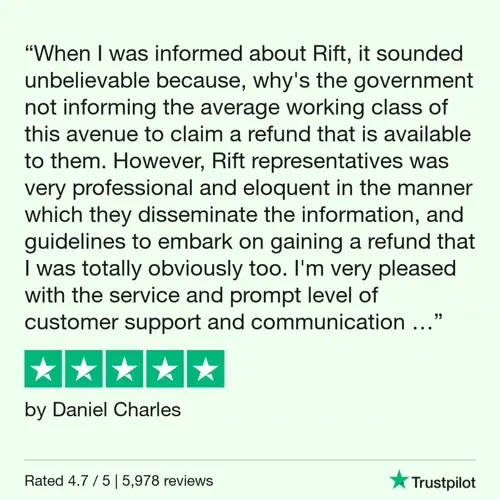
I'm not sure I have the info?
To make your claim the key things we need to know are:
We have access to a number of specialised custom built systems that link to HMRC, Government depts, DVLA, travel routes, etc and can get the information for you.
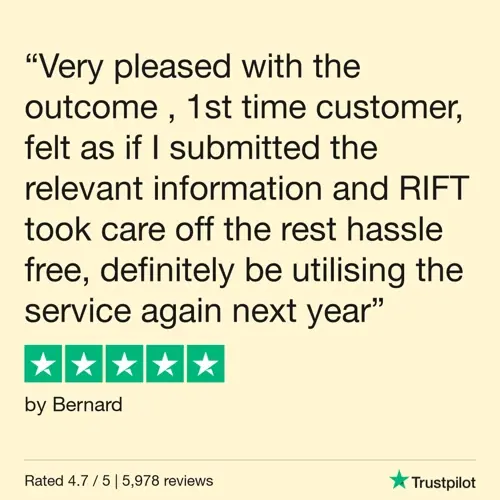
I don't know anyone who's done it.
You're absolutely right to be cautious. There's a lot of scams to be aware of and a word of mouth recommendation from someone you trust is the best way to be sure.
We don't know who your friends are, but if they're in the Armed Forces, Construction Trades, Security or Offshore ask them if they've used us. 97% say they would recommend us.
A lot of people have - we've helped 130,000 customers make claims in the last 20 years - but British people don't really talk about money so it's not something that tends to come up in conversation.
Otherwise, check us out on Trust Pilot. It's the next best thing.
First we need to talk to you on the phone or online run through some questions about your work and travel and tell you how a claim is made.
If you would like to claim for you we send you a form to sign that lets us talk to HMRC on your behalf to do that.
We'll then give you your own Personal Tax Specialist who will gather all the information needed to calculate exactly what you're owed.
We send you the total to approve the amount and what our fee comes to and then submit it to HMRC for you.
You don't pay any fees upfront. To make it simpler for you we take the fee from the refund total and then pay it into your bank account.
It takes a few weeks to put together a really comprehensive tax refund claim. As soon as you're happy to go forward, we'll send your claim to HMRC for approval. It can take 8-10 weeks for the taxman to check your details and confirm your refund total, so the sooner you get us the information we need the sooner you'll have your money.
The best way to speed up your RIFT Tax Refund is to get your Authorising your agent (64-8) form back to us fast. This is the form that lets us tackle the taxman on your behalf. Without 2 physical copies of your 64-8 document, HMRC won't even speak to us about your claim. It's annoying, but it's all about protecting you.
As soon as your refund's paid out, we'll either send you a cheque or pay it into your bank account if you prefer. The choice is yours.
Have a look at our 'How Long Does A Tax Refund Take' page for more information about how long it takes to get your tax refund done and some pointers for how to make things happen as fast as possible.
Remember that you can claim for the last 4 tax years and you can make your claim at any time.
Please do!
Not only will you be doing them a big favour if you can get some cash back in their pockets but we'll pay you a £50 referral reward for anyone who does go on to claim through us.
Until the 9th of October we'll also pay you an extra bonus of £150 if 5 people claim with us (T&Cs apply)
If you tell them to apply now they'll get their tax refund in time for Christmas and you'll get something extra to stuff in your stocking. That could be £400 in your pocket as well as the warm glow you get from helping out your mates.
To get started:
Not sure which friends could claim? Find out more about who can claim tax refunds.
There's no limit to the number of people you can refer and we pay out the rewards every week. It could be a nice little extra in your pocket, as well as the lovely warm feeling you get from knowing you helped out a mate.
Find out more about the referral scheme.
In HMRC's language, a tax rebate is "a refund on taxes when the tax liability is less than the taxes paid". What it's definitely not is a prize or a dodgy way of ''cheating the system''. When you're owed a HMRC tax refund, it's because you've already paid too much tax.
When you're paying your own way to temporary workplaces, the odds are good that you're owed some tax back for your expenses. ''Temporary'' here just means it's somewhere you're working for less than 24 months on the trot. It's worth making sure you get back what you're owed, too. You can claim a tax rebate for up to 4 years, with an average 4-year rebate with RIFT coming to £3,000. This is based on average total claims data for a 4-year period. Refunds are subject to fees of 36%. Exclusions apply.
A lot of the time, people don't even realise how many of their day-to-day expenses qualify for tax relief. Unless you prove to HMRC what you're owed, though, the taxman won't have the information he needs to settle up. The tax rebate system's a little clunky in places, but RIFT's on-demand, 1-on-1 service means you'll never get lost or lose out.
Just answer a few simple questions and we can tell you whether it looks like the expenses you've had to pay out in the course of your work meant that you may have paid more tax than you should.
You can also use our tax refund calculator to see an estimate of how much you could be due if you make a claim.
Our standard charges are:
Don't worry if you had a mixture of self-employed and PAYE (employed by a company) work during the period you want to claim for. We can work out if you would be due a refund and let you know what the fee would be.
See our full list of services with prices and options.
When we receive your refund from HMRC we take out our fee and then pay you your refund. There are no up front charges to pay for anything. If you are not due a refund then there is no charge.
Before we send your claim to HMRC we send a copy to you with a full breakdown of all the fees so you can clearly see:
You will need to sign and send this back to us to say you have read, understood and agreed with it, along with a declaration that all the information you have provided about your claim is true. This means you will never be charged any fees you have not agreed to.
There are no further fees to pay, and no hidden charges.
All aftercare is included (if you need us to call HMRC on your behalf, if you have a problem you would like us to resolve with them, if your tax code needs correcting etc).
Your refund is covered by the unique RIFT Guarantee which means that whatever happens, your refund stays in your own pocket and will never go back to HMRC. If we fight any HMRC enquiries for you (which is included free of charge) and if they did demand any money back, we would pay back the refund to HMRC ourselves.
We will also send you a reminder when it's time to see if you have a claim next year.
If you don't have a P60 we you can use your last payslip or income statement. We can also get copies of the P60 directly from HMRC.
Visit our checklist for details of the documents you need and what to do if you are missing anything.
You can reach us on the phone or Livechat
Mon-Fri: 8:30am – 6pm
Saturday & Sunday: Closed
You can email us or send us a question or feedback through our contact page at any time and you can leave us a private message through our Facebook page.
A tax return is a form you use to tell HMRC about your earnings and expenses. It's a complete overview of the taxable income you've made and the costs of doing business you've faced.
A tax refund is money HMRC gives back when you've paid too much tax. There are several reasons why you might overpay, and you often have to file a claim and prove you did.
There’s basically no acceptable excuse for missing self assessment tax return deadlines, even if you don't owe HMRC anything. If you miss the deadline there are a number of self assessment tax return penalties that you could be hit with:
We’re here to take care of everything - from completing your tax return, through calculating any refunds due, to speaking to HMRC on your behalf. You can also get more self assessment tax return tips and advice here with some clear ''dos'' and ''dont's''.
Find out more about self assessment deadlines and penalties.
When you're claiming tax relief for food, you need to keep hold of things like receipts and order tickets as evidence of what you’ve spent. If you're paying by card, keep the slip that comes out of the machine. You can also get this information from bank statements but that will be much harder work.
If you take cash out of a machine to pay then take a quick photo of the withdrawal receipt. However, as with your bank statement this will only show what you took out, not what you spent so get a photo of the till total or anything else that shows the actual price you paid.
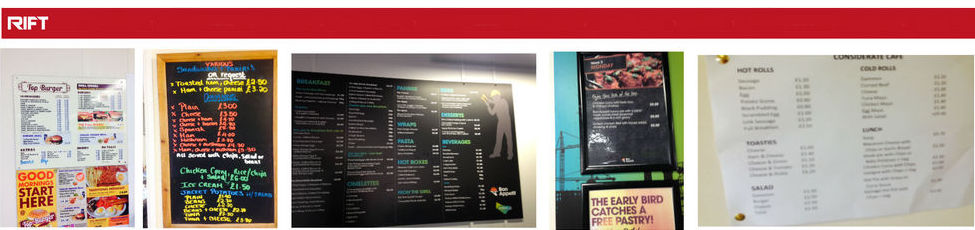
It’s a good idea to take a photo the price board or menu as extra evidence of your claim. If the menu doesn’t change you don’t have to take the same picture everyday – just one to show the prices is fine.
Here are some examples that customers have taken in the past. You don't need to take an award winning photo, just a quick snap of the prices like this will do.
You won’t need us to send all the records for us to do your claim but we need to know that you have evidence of your spending in case HMRC do ask for it and to make sure you're protected by our RIFT Guarantee.
We can make a refund claim for your food related expenses as part of your travel tax refund, but not as a stand alone expenses claim.
You don’t need to keep lots of paper. Store any photos, screenshots or scans somewhere you can easily find them on your computer. For now, just hold onto them. We may need to ask you for these at a later date to support your claim.
It's a good idea to take a photo of the menu board or price list where you bought your food. If it doesn’t change, you don’t have to take the same picture everyday – just one to show the prices like these ones taken at real works canteens.
If you order your food online then save the confirmation email.
You probably won't need them all to back up your tax refund claim but we need to know that you have the evidence if the tax man does ask for it.
We can make a refund claim for your food related expenses as part of your travel tax refund, but not as a stand alone expenses claim.
It's tricky to claim tax relief if you don't have proof of what you've spent. We may still be able to include your food costs in your refund claim if you’re working on a site where we have details of standard costs for.
Just remember to start keeping your records from now on to make things easier next year.
Use our tax calculator to find out if you're due a refund.
Yes. If you are staying overnight for work and your employer does not refund the money you spent on meals then you can claim tax relief in the same way as you can with other work related expenses.
Again, it’s important that you’re honest. Don’t claim to have eaten a 3 course meal in the hotel restaurant if you popped out to the local takeaway.
Don't forget to claim for the cost of food purchased during travelling to your temporary workplace. Whether you buy your food from the buffet trolley, the service station or at a shop or takeaway en route remember to keep the evidence so that we can claim the tax relief for you.
If you can't get a receipt for your food, even a photo of the price board can be helpful in proving what you've spent. Just take a quick snap with your phone and keep it safe. The taxman's not trying to trip you up or cheat you out of money. All he's after is evidence to back up your claim, so he's sure you're paying the right amount of tax.
You won’t need to send us all the photos for your claim. We just need to know you have them in case HMRC do ask for some evidence of your costs to make sure you're covered by the RIFT Guarantee.
Sometimes but if the subsistence allowance completely covers the cost of your food while you’re away from home for overnight stays then you can’t claim anything else.
If the amount does not cover all your expenses for food then you will be able to claim the difference.
If you’ve made your lunch at home, then you can’t claim the costs. This is because the groceries are part of your personal shopping bill, not work related expenses.
It's often strange little details like this that easily trip people up. That's why we're here to help make sure you get the best refund possible and always stay on the right side of HMRC's rules.
Use our Tax Calculator to find out if you can claim.
If you’re self-employed, freelance, contracting or working CIS in construction, this will be handled under your expenses in your self-assessment tax return in the normal way.
The same principles apply though, you will need to be able to provide evidence of what you’ve spent in order to claim them as costs. Keep your meal receipts in the same way as you keep all your other records needed for your tax return.
You can still claim even if your canteen is subsidised - but only for the subsidised amount that you paid.
Make sure to keep a record of what you spend so that we can work out the total at the end of the year.
If you didn’t get a receipt or meal ticket then just take a photo of the menu board or price list where you bought your food. If it doesn’t change, you don’t have to take the same picture everyday – just one to show the prices is fine.
Many people assume it’s not worth the hassle of keeping records of what you spend on meals because the refund you get back won’t be worth it.
Shockingly it turns out that you're probably looking at about a staggering £90,000 spent on food over your working life – that’s enough to pay off an average mortgage 6 years early!
The cost of food varies a lot up and down the country, and depends on things like whether you have a subsidised canteen at work. Still, the average daily spend of a person at work is £5 - £10. This means you should be getting £250 - £480 more back from HMRC in your refund every year.
If you don’t claim you’re missing out, on average, around £12-25k over the course of your working life – and that’s a considerable amount of money for taking a few photos of what you had for lunch.
Let's have a look at some examples:
Bill, is a builder working on a construction site in London.
Were you keeping track? Bill’s spent £9.94 already – and he’s probably a bit dehydrated at that!
All pretty simple so far, right? Only, Bill had to trek down from his home in Scotland for this job and travel home at weekends. He claims his tax refunds for the food he buys during his work day, but he's still missing out badly.
This means he spends £22.25 on food during his travels to work.
We can make a refund claim for your food related expenses as part of your travel tax refund, but not as a stand alone expenses claim.
Use our Tax Refund Calculator to find out what you could claim.
If you’re travelling to a temporary workplace then you can claim the costs for food purchased during this time.
This might be when you are travelling during the working day to temporary workplaces or it might be if you have to travel a long distance to get to a temporary site that you’re staying over at.
Whether you buy your food from the buffet trolley, the service station or at a shop or takeaway en route remember to keep the evidence so that we can claim the tax relief for you.
Find out what you could claim with our Tax Calculator.
If you’re part of the Hungry Soldier scheme then you sign for your meals and the cost is taken directly out of your salary in arrears. You will need to keep a record of how much this adds up to each month and let us know what you spent.
The amount taken out should be shown on your payslip. You’ll need to give us copies of your payslips for your travel refund anyway, so you should be keeping those.
Use our Tax Refund Calculator to find out how much you could claim.
When you're claiming tax relief for food, you need to keep hold of things like receipts and order tickets as evidence of what you’ve spent. If you're paying by card, keep the slip that comes out of the machine. You can also get this information from bank statements but that will be much harder work.
If you take cash out of a machine to pay then take a quick photo of the withdrawal receipt. However, as with your bank statement this will only show what you took out, not what you spent so get a photo of the till total or anything else that shows the actual price you paid.
It’s also a good idea to take a photo of the price board or menu as extra evidence of your claim. If the menu doesn’t change you don’t have to take the same picture everyday – just one to show the prices is fine.
If you haven’t been good at keeping receipts to date, start keeping them from now on to make claiming easier next year. You wouldn’t throw away a £5 note, so don’t throw away your receipts as that’s what they could be worth to you.
We can make a refund claim for your food related expenses as part of your travel tax refund, but not as a stand alone expenses claim.
Use our Tax Refund calculator to find out how much you can claim.
You don’t need to keep lots of paper. You can take photos or scans of them and save them somewhere you can easily find them on your computer.
For now, just hold onto them. We may need to ask you for them at a later date to support your claim.
You may not need to send them to us for your tax refund claim but we need to know that you have the evidence to hand if HMRC does ask for it so that you're protected by the RIFT Guarantee.
This depends on quite a few factors about your personal situation, so it’s best to speak to us directly and we’ll talk it through with you and let you know what to do.
You can claim for your meals bought in the Cookhouse or Mess during working hours though.
Read more about tax refunds for the Armed Forces.
This depends on whether your permanent residence is elsewhere. If you’re not sure and want to talk it through with us then give us a call and we’ll let you know how the rules apply to your situation.
If it is then you can claim tax relief against the costs of any takeaways or meals out you have to buy.
If you ordered online keep a copy of the email confirmation or save a screenshot.
If you went to the takeaway, then take a photo of your receipt or the menu board.
Use our Tax Calculator and find out if you're due a refund.
If you’re in Substitute Living Single Accommodation (SSA), you’ll get an additional allowance given to purchase food as you won’t be entitled to use the Cookhouse. You get this as a supplement in your pay so you can only claim if your expenses exceed the amount of the allowance.
Find out more about tax refunds for members of the Armed Forces.
Food that you don't personally pay for can't be claimed against for tax relief. For example, if you're at sea in the Royal Navy, your meals are provided for you and don't count toward you tax refund.
You should keep track of any meals you have to buy onshore or off-base, though, as those can often count.
Read more about tax refunds for the Armed Forces.
If you’re part of the Hungry Soldier scheme then you sign for your meals and the cost is taken directly out of your salary in arrears. You will need to keep a record of how much this adds up to each month and let us know what you spent.
The amount taken out should be shown on your payslip. You’ll need to give us copies of your payslips for your travel refund anyway, so you should be keeping those.
Use our Tax Refund Calculator to find out how much you could claim.
When you're claiming tax relief for food, you need to keep hold of things like receipts and order tickets as evidence of what you’ve spent. If you're paying by card, keep the slip that comes out of the machine. You can also get this information from bank statements but that will be much harder work.
If you take cash out of a machine to pay then take a quick photo of the withdrawal receipt. However, as with your bank statement this will only show what you took out, not what you spent so get a photo of the till total or anything else that shows the actual price you paid.
It’s also a good idea to take a photo of the price board or menu as extra evidence of your claim. If the menu doesn’t change you don’t have to take the same picture everyday – just one to show the prices is fine.
If you haven’t been good at keeping receipts to date, start keeping them from now on to make claiming easier next year. You wouldn’t throw away a £5 note, so don’t throw away your receipts as that’s what they could be worth to you.
We can make a refund claim for your food related expenses as part of your travel tax refund, but not as a stand alone expenses claim.
Use our Tax Refund calculator to find out how much you can claim.
You don’t need to keep lots of paper. You can take photos or scans of them and save them somewhere you can easily find them on your computer.
For now, just hold onto them. We may need to ask you for them at a later date to support your claim.
You may not need to send them to us for your tax refund claim but we need to know that you have the evidence to hand if HMRC does ask for it so that you're protected by the RIFT Guarantee.
This depends on quite a few factors about your personal situation, so it’s best to speak to us directly and we’ll talk it through with you and let you know what to do.
You can claim for your meals bought in the Cookhouse or Mess during working hours though.
Read more about tax refunds for the Armed Forces.
This depends on whether your permanent residence is elsewhere. If you’re not sure and want to talk it through with us then give us a call and we’ll let you know how the rules apply to your situation.
If it is then you can claim tax relief against the costs of any takeaways or meals out you have to buy.
If you ordered online keep a copy of the email confirmation or save a screenshot.
If you went to the takeaway, then take a photo of your receipt or the menu board.
Use our Tax Calculator and find out if you're due a refund.
If you’re in Substitute Living Single Accommodation (SSA), you’ll get an additional allowance given to purchase food as you won’t be entitled to use the Cookhouse. You get this as a supplement in your pay so you can only claim if your expenses exceed the amount of the allowance.
Find out more about tax refunds for members of the Armed Forces.
Food that you don't personally pay for can't be claimed against for tax relief. For example, if you're at sea in the Royal Navy, your meals are provided for you and don't count toward you tax refund.
You should keep track of any meals you have to buy onshore or off-base, though, as those can often count.
Read more about tax refunds for the Armed Forces.
When you're claiming tax relief for food, you need to keep hold of things like receipts and order tickets as evidence of what you’ve spent. If you're paying by card, keep the slip that comes out of the machine. You can also get this information from bank statements but that will be much harder work.
If you take cash out of a machine to pay then take a quick photo of the withdrawal receipt. However, as with your bank statement this will only show what you took out, not what you spent so get a photo of the till total or anything else that shows the actual price you paid.
It’s a good idea to take a photo the price board or menu as extra evidence of your claim. If the menu doesn’t change you don’t have to take the same picture everyday – just one to show the prices is fine.
Here are some examples that customers have taken in the past. You don't need to take an award winning photo, just a quick snap of the prices like this will do.
You won’t need us to send all the records for us to do your claim but we need to know that you have evidence of your spending in case HMRC do ask for it and to make sure you're protected by our RIFT Guarantee.
We can make a refund claim for your food related expenses as part of your travel tax refund, but not as a stand alone expenses claim.
You don’t need to keep lots of paper. Store any photos, screenshots or scans somewhere you can easily find them on your computer. For now, just hold onto them. We may need to ask you for these at a later date to support your claim.
It's a good idea to take a photo of the menu board or price list where you bought your food. If it doesn’t change, you don’t have to take the same picture everyday – just one to show the prices like these ones taken at real works canteens.
If you order your food online then save the confirmation email.
You probably won't need them all to back up your tax refund claim but we need to know that you have the evidence if the tax man does ask for it.
We can make a refund claim for your food related expenses as part of your travel tax refund, but not as a stand alone expenses claim.
It's tricky to claim tax relief if you don't have proof of what you've spent. We may still be able to include your food costs in your refund claim if you’re working on a site where we have details of standard costs for.
Just remember to start keeping your records from now on to make things easier next year.
Use our tax calculator to find out if you're due a refund.
Yes. If you are staying overnight for work and your employer does not refund the money you spent on meals then you can claim tax relief in the same way as you can with other work related expenses.
Again, it’s important that you’re honest. Don’t claim to have eaten a 3 course meal in the hotel restaurant if you popped out to the local takeaway.
Don't forget to claim for the cost of food purchased during travelling to your temporary workplace. Whether you buy your food from the buffet trolley, the service station or at a shop or takeaway en route remember to keep the evidence so that we can claim the tax relief for you.
If you can't get a receipt for your food, even a photo of the price board can be helpful in proving what you've spent. Just take a quick snap with your phone and keep it safe. The taxman's not trying to trip you up or cheat you out of money. All he's after is evidence to back up your claim, so he's sure you're paying the right amount of tax.
You won’t need to send us all the photos for your claim. We just need to know you have them in case HMRC do ask for some evidence of your costs to make sure you're covered by the RIFT Guarantee.
Sometimes but if the subsistence allowance completely covers the cost of your food while you’re away from home for overnight stays then you can’t claim anything else.
If the amount does not cover all your expenses for food then you will be able to claim the difference.
If you’ve made your lunch at home, then you can’t claim the costs. This is because the groceries are part of your personal shopping bill, not work related expenses.
It's often strange little details like this that easily trip people up. That's why we're here to help make sure you get the best refund possible and always stay on the right side of HMRC's rules.
Use our Tax Calculator to find out if you can claim.
You can still claim even if your canteen is subsidised - but only for the subsidised amount that you paid.
Make sure to keep a record of what you spend so that we can work out the total at the end of the year.
If you didn’t get a receipt or meal ticket then just take a photo of the menu board or price list where you bought your food. If it doesn’t change, you don’t have to take the same picture everyday – just one to show the prices is fine.
Many people assume it’s not worth the hassle of keeping records of what you spend on meals because the refund you get back won’t be worth it.
Shockingly it turns out that you're probably looking at about a staggering £90,000 spent on food over your working life – that’s enough to pay off an average mortgage 6 years early!
The cost of food varies a lot up and down the country, and depends on things like whether you have a subsidised canteen at work. Still, the average daily spend of a person at work is £5 - £10. This means you should be getting £250 - £480 more back from HMRC in your refund every year.
If you don’t claim you’re missing out, on average, around £12-25k over the course of your working life – and that’s a considerable amount of money for taking a few photos of what you had for lunch.
Let's have a look at some examples:
Bill, is a builder working on a construction site in London.
Were you keeping track? Bill’s spent £9.94 already – and he’s probably a bit dehydrated at that!
All pretty simple so far, right? Only, Bill had to trek down from his home in Scotland for this job and travel home at weekends. He claims his tax refunds for the food he buys during his work day, but he's still missing out badly.
This means he spends £22.25 on food during his travels to work.
We can make a refund claim for your food related expenses as part of your travel tax refund, but not as a stand alone expenses claim.
Use our Tax Refund Calculator to find out what you could claim.
If you’re travelling to a temporary workplace then you can claim the costs for food purchased during this time.
This might be when you are travelling during the working day to temporary workplaces or it might be if you have to travel a long distance to get to a temporary site that you’re staying over at.
Whether you buy your food from the buffet trolley, the service station or at a shop or takeaway en route remember to keep the evidence so that we can claim the tax relief for you.
Find out what you could claim with our Tax Calculator.
Yes, as well as your 4 quarterly updates, a final tax return (also called a Final Declaration) will still need to be submitted by the following 31st January.
The final declaration
After the tax year ends (5 April), you have until 31 January of the following year to submit a final declaration.
This is where you:
Think of quarterly updates as progress reports and the final declaration as your official statement.
No, it only changes how and when you report your income.
There are no changes to making payment.
Yes, for Self Employed and income from property of more that £50,000. Those above £30,000 will be included from April 2027.
Yes gross income (or turnover) is before any deductions such as expenses. The qualifying income thresholds would apply to your share if income from jointly owned property.
You’ll need to keep digital records for all of them and we’ll send updates for each income stream separately.
HMRC can issue fines or penalties for missed submissions.
MTD has introduced a points-based penalty system for late submissions and financial penalties for late payment.
Late submission penalties:
How points accumulate:
Points reset:
If you submit all your required updates on time for a full compliance period (usually 24 months), your points reset to zero.
Late payment penalties:
Example scenario:
How to avoid penalties:
Partnerships are not currently in scope of MTD.
Yes. Income from self employment, UK property and foreign property are in scope of MTD. It is gross income from self employment and rental income.
Not until April 2027
Not yet. Currently it is planned that this group will be included from April 2028.
Qualifying income is that from self employment and income from property. PAYE would not be considered in the qualifying income threshold test.
We’ll manage this for you. You’ll need to keep digital records for Income Tax if all of the following apply:
Under MTD for Income Tax, you'll submit quarterly updates instead of one annual tax return.
The quarterly cycle:
Each tax year is divided into four quarters:
In your quarterly update you must report on:
These are summary updates—you're reporting the figures calculated by your MTD-compatible software based on the digital records you've kept.
For construction industry workers, understanding how MTD interacts with the Construction Industry Scheme is crucial.
CIS deductions still apply:
MTD doesn't replace CIS. If you're a subcontractor, contractors will still deduct tax from your payments at 20% or 30% (or 0% if you have gross payment status). These deductions continue exactly as before.
Quarterly updates include CIS information:
When you submit your quarterly MTD updates, you'll report your construction income and the CIS tax that's been deducted. Your MTD-compatible software should help you track these deductions throughout each quarter.
CIS deductions count toward your tax bill:
The tax already deducted under CIS is credited against your total tax liability. At the end of the tax year, HMRC calculates your final tax bill and offsets the CIS deductions. If too much was deducted, you receive a refund. If too little, you pay the difference.
Example scenario:
Imagine you're a self-employed electrician. In quarter one, you earn £15,000 from construction work, with £3,000 deducted under CIS (20%). When you submit your MTD quarterly update, you report the £15,000 income and note the £3,000 already paid. Your software calculates whether you're on track for a refund or additional payment at year-end.
Importance of accurate contractor statements:
You need the monthly payment and deduction statements from your contractors to complete your MTD updates accurately. Keep these statements organised and check them against your own records.
While MTD requires significant changes, it offers several advantages for construction workers and contractors:
Real-time tax visibility:
Instead of waiting until the end of the tax year to discover your tax bill, MTD gives you a clearer picture throughout the year. You'll know approximately what you owe each quarter, helping you plan and budget more effectively.
Reduced errors:
Digital record-keeping and automatic calculations significantly reduce mathematical errors and missed deductions. MTD-compatible software can automatically categorise expenses and calculate allowances, reducing the risk of underpaying or overpaying tax.
Better cash flow management:
Quarterly updates help you spread your tax planning across the year. You can set aside money gradually rather than facing a large unexpected bill. For construction workers managing irregular income and CIS deductions, this visibility is particularly valuable.
Integration with CIS:
MTD software can integrate CIS deductions directly into your tax calculations. The tax already deducted under CIS is automatically accounted for, giving you a clearer view of whether you'll receive a refund or owe additional tax.
Time savings in the long run:
While there's an initial learning curve, digital record-keeping can save time compared to managing paper receipts and manual bookkeeping. Many MTD-compatible apps allow you to photograph receipts, track mileage, and categorise expenses on the go.
Improved compliance:
Regular quarterly submissions mean you're less likely to miss deadlines or forget important deductions. The software prompts you to submit updates, reducing the risk of penalties.
To comply with MTD, you must use software that meets HMRC's standards.
What makes software MTD-compatible:
You cannot:
Features to look for (construction-specific):
Finding compatible software:
HMRC maintains a list of MTD-compatible software providers on GOV.UK. You can filter by type of tax (Income Tax, VAT), business size, and features needed.
If you are a RIFT customer your subscription will include access to software as part of the service.
If you are a RIFT customer your subscription will include access to software as part of the service.
If you choose to do your own submissions HMRC has estimated that the initial cost to purchase the software will be around £320 and then £110 per year on an ongoing basis.
Some estimates have put the total investment required at four times that cost.
You'll need a MyRIFT account to hold all the information needed to make your tax refund claim with us. It's free to set up and it's the easiest way to update your info, track your documents and make your claim.
New to RIFT
If you're new to RIFT and wanting to get your claim started, have checked that you're due a refund by answering the 4 simple questions, and filled in your name, email address and created a password then you've already created your account. You should also have received a Welcome to RIFT email that contains more information about what happens next and has all the links you need.
Login page to continue updating your information.
If you need to reset your password, you can do that from the login page.
If you need any help, give us a call on 01233 628648 or use the Live Chat to talk to one of our Customer Service Team.
Returning to RIFT
If you've claimed with us before using a paper Refund Pack or Forms by Phone and not yet set up your MyRIFT account then get in touch by calling 01233 628648 or using the Live Chat below and we can get your account created and make it easier for you to claim this year.
Once you're logged in you'll be able to fill in your personal details, work locations, expense details and upload relevant documents. It's everything you're used to doing when making a claim with RIFT, but much quicker and easier now. You can also track the progress of your claim whenever, and wherever, you want to.
Once you are happy you have uploaded all the necessary information, press submit and we will take it from there!
You can call or Live Chat with us us 8.30am to 8.30pm Monday to Friday and 9.30am to 1.30pm Saturday.
Outside of these time you can send us an email to info@riftrefunds.co.uk or go to our Facebook page and send us a private message
If you're already a RIFT customer and have given us information online before then you'll have done that using your MyRIFT account. If you can remember your login details, you can sign, update your info for this year, upload your documents and get started right away.
It might be a year or more since you last used your MyRIFT account, so if you can't remember the details (email and password) you used to set it up just get in touch using the Live Chat here on the site, call 01233 628648 or drop us an email to info@riftrefund.co.uk and we'll get it all reset and ready for you to use again.
If you've claimed with us before using a paper Refund Pack or Forms by Phone and not yet set up your MyRIFT account then get in touch and we can get your account created and make it easier for you to claim this year.
If you're not sure if you've got an account get in touch and we can check for you. If you have, we'll help you get started, if not, we'll get you set up.
You can call or Live Chat with us us 8.30am to 8.30pm Monday to Friday and 9.30am to 1.30pm Saturday.
Outside of these time you can send us an email to info@riftrefunds.co.uk or go to our Facebook page and send us a private message
If you forget your password for your MyRIFT account, look below the log in button and you'll see a helpful link to ‘reset your password’.
Click the link, enter the email address you use to login to your MyRIFT account and we will email you a link to reset your password.
Once you get the email, open it and click the link which will take you a page where you'll be asked to create, and then confirm, the new password you want.
Press ‘change password’ and you will be taken to the homepage of your MyRIFT account.
If you can't remember the email address you used when setting up your account, or need help with anything else, please give us a call on 01233 628648 or use the Live Chat below and we can get you all set up.
If your email address has changed since you set up your account, or if you want to use a different email address for any reason then it's easy to update.
If you still have access to your old email account, use it to login and then you'll be able to update your email address on your MyRIFT Personal Dashboard.
If you no longer have access to your old email address, or can't remember it, and need us to update your account to your new address then give us a call on 01233 628648 or use Live Chat and our team will be happy to get it all sorted out for you.
There are a couple of reasons that you may have a MyRIFT account and not realise it.
Account created a long time ago
The most common is that you set one up when you first made an enquiry to RIFT, and that could have been quite a while ago. If you answered the 4 questions on our website to see if you were due a refund you would have been given the option to set up your account. Do you remember filling in your name, email address and creating a password? If so that's when it was set up and you would have also received a confirmation email.
If you have an account already, and can remember the details you gave when it was created, you can use them to login, reset your password or update your email, and then continue with your claim online.
If you aren't sure of any of the details you used and need us to reset them, give us a call on 01233 628648 or use Live Chat and our Customer Service Team can help you.
Account created for you by Customer Services and never needed
If you made a claim with us over the phone one of our Customer Service Team may have asked you if you would like them to set an account up for you to use. If they did this then you would have been sent an email with instructions on how complete the set up and create your password and confirm login details, but if this was it the case it was probably more than a year ago now.
What this means is that the account is sitting there in the system, even if you never needed to use it.
It's easy to get it reactivated so that you can update your info, upload your documents and track the progress of your claim this year, though.If you do still have the set up email, you can follow the instructions but it's probably easier to just give us a quick call on 01233 628648 or use Live Chat and we can get it all working for you.
You can call or Live Chat with us us 8.30am to 8.30pm Monday to Friday and 9.30am to 1.30pm Saturday.
Outside of these time you can send us an email to info@riftrefunds.co.uk or go to our Facebook page and send us a private message
If you're having trouble logging in and need to check the email address you used to set up your account, simply give us a quick call on 01233 628648 or use the Live Chat and our we'll be able to quickly check for you.
Once you know, you can log in and carry on, or if you'd like to update the email on the account then we can do that for you there and then.
You can call or Live Chat with us us 8.30am to 8.30pm Monday to Friday and 9.30am to 1.30pm Saturday.
Outside of these time you can send us an email to info@riftrefunds.co.uk or go to our Facebook page and send us a private message.
Yes, as long as you’ve got a receipt from the taxi driver.
We can’t claim without the receipt because prices can vary a lot and we need evidence of your actual expenses for HMRC. We can only claim for the actual taxi rides you made, not the average cost between two destinations.
Have a look at our checklist of the documents or paperwork we'll need for your claim.
Use our tax calculator to see if due a tax refund for your travel and expenses.
No this is completely different. Seafarers deduction deals with residency issues and how many days you are out of the country. Our claim is for your travel from your home to the heliports.
Tax refunds aren't just for offshore travel expenses, either. The tax rules also allow offshore workers to claim for hotel bills and a number of other expenses. If you're footing those bills yourself, you could be due some cash. Working offshore is challenging enough already. You don't need the taxman drilling deeper into your wages than he's supposed to.
Use our tax calculator to find out if you're owed a refund.
Yes, as long as you’ve got the receipt.
We can’t claim without the receipt because costs for hotels can vary a lot, even for the same room on different dates.
We need evidence of your actual expenses for HMRC. We can only claim for the actual stays you made.
Have a look at our checklist of the documents or paperwork we'll need for your claim.
Definitely. Most of our offshore clients work two weeks on, two weeks off and we can claim on average £700 - £900 per year.
Use our tax calculator to see if you're owed anything for the past 4 years.
If you’re having any problems with getting your travel history, we've listed 2 possible options below:
Don’t worry to much if you can’t remember everything, we don’t need exact dates and locations for your first claim, just give as much detail as you can.
By the time you come to make any future claims you'll know what to keep each year so we'll probably be able to claim a lot more for you.
A P60 is a really useful tool for claiming a tax rebate from HMRC, but you can still make a claim without one if necessary. When you’ve got RIFT working on your refund, there are other ways we can track down the information needed for your claim. We can use things like payslips and income statements, for instance – and can even get key information directly from HMRC.
If you've lost your P60, grabbing a replacement P60 from your work shouldn’t be a major hassle. The same goes for P60s from previous years if you need those as well. Just talk to your employer and explain what you need. This can be a real boost to your tax refund if your claim stretches back over more than one year.
Since a P60 is the record of all the tax you've had deducted over a year, it’ll probably be your first tip-off that you’re owed a rebate in the first place. On top of that, it’s got a lot of the most important information needed to show HMRC that you've paid too much tax. To kick things off, compare your P60 to your payslips. If something doesn't add up, you’ve got your first clue right in your hands.
Because a P60 is a record of your PAYE earnings and tax over a year, Sole Traders won’t usually get (or even need) them. Being self-employed, Sole Traders use Self Assessment tax returns instead of PAYE. Of course, it’s completely possible to be a Sole Trader but still also receive PAYE income from another job. In that case, you’ll still get a yearly P60 as normal from your PAYE employer.
It might be difficult without but lets just double check you can't get hold of them ((P60, payslip last 3 months, passport, driving licence.). It will save you a lot of work if you set up a PTA. HMRC website is safe to use with sensitve info, help us get and accurate refund and accelerate the time to submit your refund claim.
We can absolutely still help you with your refund but this way will be much quicker, safer and reliable with the HMRC website, we've been doing this for over 25 years and this is 100% the best and easiest way.
Everyone is different but we've helped over 140,000 customers and the customers that do it this way find it much easier. It's a super safe platform on HMRC for sensetive info, be more reliable info and help our expert team get the most they can for you.
Its a Personal Tax Account. HMRC provides this for everyone, it will have all your info there and you can give limited access to our team to get info needed quickly and safely.
You don't have to but it will make things a bit harder for you, and we could end up with the wrong info. It will only give our Tax Specialist Team limited access through what they call an agent portal, and you'll still be able to remove us at any time for any reason.
We'll send you an email with a specific link for you to provide us with access, you'll just need to follow the steps on the HMRC website. Call us to find out more and get your link to a Personal Tax Account
This will just be one part of it, our Tax Specialist Team will assess your info and then submit a refund claim based on getting the most back for you, we also gaurentee the refund if all the info is correct, spend hours working directly with HMRC for you and make sure the money you're owed is back with you. We've succesfully claimed around £380m back in 25 years.
We can help you on the phone if you want, although it's a simple HMRC website. You'll just need to click the link we send to take you straight there and then follow the steps. Give it a try and just call us up if you need help.
Not everyone, but for 25 years we've tried to make things easy for customers and we appreciate this is really sensitive info so using a secure HMRC website is the best way. It's also super easy.
Just hit the link below to set up your personal tax account
Our standard charges are:
When we receive your refund from HMRC we take out our fee and then pay it the refund to you. There are no up front charges to pay for anything. If you are not due a refund then there is no charge.
Before we send your claim to HMRC we sent a copy to you with a full breakdown of all the fees so you can clearly see:
You will need to sign and send this back to us to say you have read, understood and agreed with it, along with a declaration that all the information you have provided about your claim is true. This means you will never be charged any fees you have not agreed to.
There are no further fees to pay, and no hidden charges.
All aftercare is included (if you need us to call HMRC on your behalf, if you have a problem you would like us to resolve with them, if your tax code needs correcting etc).
Your refund is covered by the unique RIFT Guarantee which means that whatever happens, your refund stays in your own pocket and will never go back to HMRC. If we fight any HMRC enquiries for you (still included in the cost) and if anything did go wrong (which it never has in 15 years) we would pay back the refund to HMRC ourselves.
We will also send you a reminder when it's time to see if you have a claim next year.
Please do!
Not only will you be doing them a big favour if you can get some cash back in their pockets but we'll pay you a £50 referral reward for anyone who does go on to claim through us.
Until the 9th of October we'll also pay you an extra bonus of £150 if 5 people claim with us (T&Cs apply)
If you tell them to apply now they'll get their tax refund in time for Christmas and you'll get something extra to stuff in your stocking. That could be £400 in your pocket as well as the warm glow you get from helping out your mates.
To get started:
Not sure which friends could claim? Find out more about who can claim tax refunds.
There's no limit to the number of people you can refer and we pay out the rewards every week. It could be a nice little extra in your pocket, as well as the lovely warm feeling you get from knowing you helped out a mate.
Find out more about the referral scheme.
Our standard charges are:
Don't worry if you had a mixture of self-employed and PAYE (employed by a company) work during the period you want to claim for. We can work out if you would be due a refund and let you know what the fee would be.
See our full list of services with prices and options.
When we receive your refund from HMRC we take out our fee and then pay you your refund. There are no up front charges to pay for anything. If you are not due a refund then there is no charge.
Before we send your claim to HMRC we send a copy to you with a full breakdown of all the fees so you can clearly see:
You will need to sign and send this back to us to say you have read, understood and agreed with it, along with a declaration that all the information you have provided about your claim is true. This means you will never be charged any fees you have not agreed to.
There are no further fees to pay, and no hidden charges.
All aftercare is included (if you need us to call HMRC on your behalf, if you have a problem you would like us to resolve with them, if your tax code needs correcting etc).
Your refund is covered by the unique RIFT Guarantee which means that whatever happens, your refund stays in your own pocket and will never go back to HMRC. If we fight any HMRC enquiries for you (which is included free of charge) and if they did demand any money back, we would pay back the refund to HMRC ourselves.
We will also send you a reminder when it's time to see if you have a claim next year.
What we need from you:
Why do I need to send documents?
We need certain documents to verify your details and process your tax claim. Without them, we can’t move forward with your refund.
What we need from you:
Why do I need to send documents?
We need certain documents to verify your details and process your tax claim. Without them, we can’t move forward with your Self Assessment.
What we need from you:
Why do I need to send documents?
We need certain documents to verify your details and process your tax claim. Without them, we can’t move forward with your refund.
To help us meet AML requirements, we kindly ask you to provide the following documents:
Proof of identity:
A valid government-issued photo ID, such as:
Proof of address:
A valid document that evidences your current residential address, such as:
This must be different to the Proof of Identity provided.
If you’ve had a tax refund yourself, you know how it works and that people really do need to claim it from HMRC.
Many people are rightly wary of scams or think their employer makes sure they haven't paid too much tax so you can reassure them that you have made a claim and it works.
The quickest way to refer your friends is in the RIFT App or using our online form.

You can also phone, email, FB, Livechat us with your friends email address or mobile number so we can send them an invitation to see if they are due a refund and send you a reward if they claim with us.
Absolutely! We want you to get the credit – and the cash – when they make their claim.
If they can tell us your name and your postcode, mobile or email address then we should be able to see that it was you who sent them our way and make sure that you get paid if they claim.
Alternatively you can tell them your RIFT reference number so they can quote it to us when they get in touch. That way, you can be sure.
Logging into the app or using the refer a friend form means they get sent a link that includes your reference number so there’s never an issue with that.
You and your friends can also find us on Facebook, and Instagram. Feel free to keep getting the word out by sharing our posts and tagging your friends to let them know they could have a refund claim.
We pay your referral rewards once the person you referred has made a successful claim with us.
If you think you are missing a payment the first thing to do is check with your friend if they got in touch and started a claim with us. You can also check the progress of all your referrals in the app.
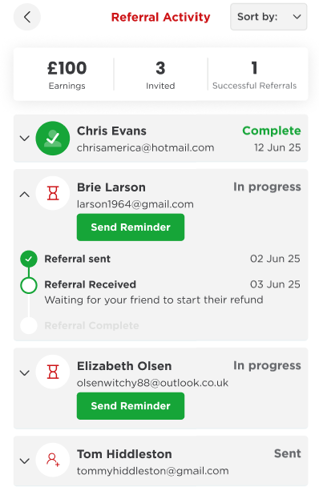
If they’ve started their claim, that’s great news for you both as they’ll be getting a refund and you’ll be getting your reward. As you’ll know from your own claim, the process can take several weeks after they first get in touch with us to get their claim completed and sent to HMRC. As soon as that happens though, you’ll get your payment.
It might be that the person you referred either wasn’t owed anything by HMRC this year, decided not to use RIFT, had already been referred by someone else or didn’t use your reference number when they first got in touch with us.
If they did use the link we sent them, and they’ve had their refund payment but you haven’t got your reward then please get in touch with us right away.
Anyone who uses their own vehicle or public transport to travel to temporary workplaces or Armed Forces postings and training (under 24 months) may be due a tax refund.
You can refer anyone to us that you think we can help. With 1 in 3 UK taxpayers paying too much tax, and over 87% of people who are referred to us being due a refund, there’s a good chance that people you know are missing out on money that could really make a difference.
Absolutely, please pass our details to anyone you think we can help.
If they’re paying from their own pockets for work travel or other essential expenses, then the odds are good that they’re owed money.
When you refer them we'll send an email with a link to the website where they can check if they are due a refund and read a bit more about RIFT.
In fact, 87% of people referred to RIFT find out they’re owed tax back from HMRC.
When you refer someone to RIFT using app or the refer a friend form, we send them a one-off email or text with a link in it.
When they click that link, we’ll know automatically it was you who referred them.
You and your friends can also find us on Facebook, and Instagram. Feel free to keep getting the word out by sharing our posts and tagging your friends to let them know they could have a refund claim.
If they decide to phone us instead to check if they’re owed tax back, remind them to tell us who referred them so we can get you your rewards.
If they can tell us your name and your postcode, mobile or email address then we should be able to see that it was you who sent them our way and make sure that you get paid if they claim.
Once you log in to the app you can use the form to refer people either directly from your phone contacts or by adding their details manually.
For every friend you refer who makes a claim, we'll pay you £100 for your first successful referral and then £50 for every one after that.
There's no limit to the number of people you can help by referring them to RIFT.
And that's not all! After you receive your first referral payment you become a VIP and have access to a choice of monthly rewards.
We’ve made Refer a Friend more rewarding for everyone:
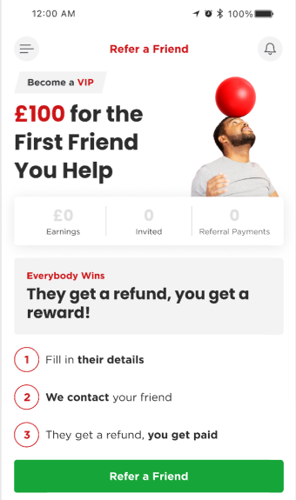
It's simple to get started.
Just fill out our referral form with your friend's details (name and mobile number or email address) and we'll handle the rest here on the website or in the RIFT app.
We’ll send them a one-off email or SMS to let them know they might have a refund claim with a link to our website where they can check.
If they do claim a refund through us, we'll pay you £100 as a thank-you bonus for your first successful friend and £50 for every one afterwards.
Once you get your first successful referral payment, you become a VIP and can choose a reward each month.
You can track the how all your referrals are progressing in the RIFT app.
There’s not limit to how many people you can send our way and you’ll get a reward for every one who claims.
If you would like to be entered into the prize draw as your VIP reward for the month:

You can only be entered into one of the monthly reward categories each month. This refreshes at the start of the next month.
Please see full Terms and Conditions for all of the details.
It’s easy!
You can refer friends:
For every friend you refer who makes a claim, we'll pay you £100 for your first successful referral and then £50 for every one after that.
There's no limit to the number of people you can help by referring them to RIFT.
And that's not all! After you receive your first referral payment you become a VIP and have access to a choice of monthly rewards.
Once your friend’s refund is completed, your reward will be paid to you automatically.
You’ll become a VIP referrer once you’ve made at least one successful referral.
Your current status is shown in the RIFT Tax Refund app and we’ll let you know by email when your VIP status is activated.

Once you're a VIP don't forget to choose your monthly reward!
When you're a VIP you'll earn:
VIPs can unlock exclusive offers and promotions at different times throughout the year, keep an eye on your email to see what's coming.
Visit the VIP page here on the site or explore the VIP area in the app.
If you're not yet a VIP all you need to do is make one successful referral to join the club.
If you win, your reward will be paid the following Friday:
We'll pay into the bank account we pay your refunds into and you can which one this is by logging into MyRIFT and checking the Banking Details section.
When you are a VIP you will be able to go into the RIFT Tax Refunds app each month and choose either:

If you win on the scratchcard or are able to choose a voucher, your reward will be paid the following Friday.
If you enter the prize draw, the winner will be selected at the start of the following month,
You can only select one reward per month.
You can track your referrals in the RIFT Tax Refunds app in the Referral Activity. It shows who you’ve referred and their current status.
Yes, your friends also benefit by getting expert support and the best chance at their full tax refund from RIFT.
No there isn't. The more successful referrals you make, the more you earn.
Some of our top referrers have made hundreds of pounds.
Only new customers count as valid referrals. If your friend has claimed with us before, it won’t qualify for a referral reward.
No, this is no longer part of the Refer a Friend offering.
If anyone calls in about it, please raise it with your Team Leader.
If you would like to play the scratchcard as your VIP reward for the month:

Referrers can only be entered into one of the monthly reward categories each month. This refreshes at the start of the next month.
Please see full Terms and Conditions for all of the details.
If you would like to choose a voucher as your VIP reward for the month:

Referrers can only be entered into one of the monthly reward categories each month. This refreshes at the start of the next month.
Please see full Terms and Conditions for all of the details.
If you’ve had a tax refund yourself, you know how it works and that people really do need to claim it from HMRC.
Many people are rightly wary of scams or think their employer makes sure they haven't paid too much tax so you can reassure them that you have made a claim and it works.
The quickest way to refer your friends is in the RIFT App or using our online form.
You can also phone, email, FB, Livechat us with your friends email address or mobile number so we can send them an invitation to see if they are due a refund and send you a reward if they claim with us.
Absolutely! We want you to get the credit – and the cash – when they make their claim.
If they can tell us your name and your postcode, mobile or email address then we should be able to see that it was you who sent them our way and make sure that you get paid if they claim.
Alternatively you can tell them your RIFT reference number so they can quote it to us when they get in touch. That way, you can be sure.
Logging into the app or using the refer a friend form means they get sent a link that includes your reference number so there’s never an issue with that.
You and your friends can also find us on Facebook, and Instagram. Feel free to keep getting the word out by sharing our posts and tagging your friends to let them know they could have a refund claim.
We pay your referral rewards once the person you referred has made a successful claim with us.
If you think you are missing a payment the first thing to do is check with your friend if they got in touch and started a claim with us. You can also check the progress of all your referrals in the app.
If they’ve started their claim, that’s great news for you both as they’ll be getting a refund and you’ll be getting your reward. As you’ll know from your own claim, the process can take several weeks after they first get in touch with us to get their claim completed and sent to HMRC. As soon as that happens though, you’ll get your payment.
It might be that the person you referred either wasn’t owed anything by HMRC this year, decided not to use RIFT, had already been referred by someone else or didn’t use your reference number when they first got in touch with us.
If they did use the link we sent them, and they’ve had their refund payment but you haven’t got your reward then please get in touch with us right away.
Anyone who uses their own vehicle or public transport to travel to temporary workplaces or Armed Forces postings and training (under 24 months) may be due a tax refund.
You can refer anyone to us that you think we can help. With 1 in 3 UK taxpayers paying too much tax, and over 87% of people who are referred to us being due a refund, there’s a good chance that people you know are missing out on money that could really make a difference.
Absolutely, please pass our details to anyone you think we can help.
If they’re paying from their own pockets for work travel or other essential expenses, then the odds are good that they’re owed money.
When you refer them we'll send an email with a link to the website where they can check if they are due a refund and read a bit more about RIFT.
In fact, 87% of people referred to RIFT find out they’re owed tax back from HMRC.
When you refer someone to RIFT using app or the refer a friend form, we send them a one-off email or text with a link in it.
When they click that link, we’ll know automatically it was you who referred them.
You and your friends can also find us on Facebook, and Instagram. Feel free to keep getting the word out by sharing our posts and tagging your friends to let them know they could have a refund claim.
If they decide to phone us instead to check if they’re owed tax back, remind them to tell us who referred them so we can get you your rewards.
If they can tell us your name and your postcode, mobile or email address then we should be able to see that it was you who sent them our way and make sure that you get paid if they claim.
Once you log in to the app you can use the form to refer people either directly from your phone contacts or by adding their details manually.
For every friend you refer who makes a claim, we'll pay you £100 for your first successful referral and then £50 for every one after that.
There's no limit to the number of people you can help by referring them to RIFT.
And that's not all! After you receive your first referral payment you become a VIP and have access to a choice of monthly rewards.
We’ve made Refer a Friend more rewarding for everyone:
It's simple to get started.
Just fill out our referral form with your friend's details (name and mobile number or email address) and we'll handle the rest here on the website or in the RIFT app.
We’ll send them a one-off email or SMS to let them know they might have a refund claim with a link to our website where they can check.
If they do claim a refund through us, we'll pay you £100 as a thank-you bonus for your first successful friend and £50 for every one afterwards.
Once you get your first successful referral payment, you become a VIP and can choose a reward each month.
You can track the how all your referrals are progressing in the RIFT app.
There’s not limit to how many people you can send our way and you’ll get a reward for every one who claims.
If you would like to be entered into the prize draw as your VIP reward for the month:
You can only be entered into one of the monthly reward categories each month. This refreshes at the start of the next month.
Please see full Terms and Conditions for all of the details.
It’s easy!
You can refer friends:
For every friend you refer who makes a claim, we'll pay you £100 for your first successful referral and then £50 for every one after that.
There's no limit to the number of people you can help by referring them to RIFT.
And that's not all! After you receive your first referral payment you become a VIP and have access to a choice of monthly rewards.
Once your friend’s refund is completed, your reward will be paid to you automatically.
You’ll become a VIP referrer once you’ve made at least one successful referral.
Your current status is shown in the RIFT Tax Refund app and we’ll let you know by email when your VIP status is activated.
Once you're a VIP don't forget to choose your monthly reward!
When you're a VIP you'll earn:
VIPs can unlock exclusive offers and promotions at different times throughout the year, keep an eye on your email to see what's coming.
Visit the VIP page here on the site or explore the VIP area in the app.
If you're not yet a VIP all you need to do is make one successful referral to join the club.
If you win, your reward will be paid the following Friday:
We'll pay into the bank account we pay your refunds into and you can which one this is by logging into MyRIFT and checking the Banking Details section.
When you are a VIP you will be able to go into the RIFT Tax Refunds app each month and choose either:
If you win on the scratchcard or are able to choose a voucher, your reward will be paid the following Friday.
If you enter the prize draw, the winner will be selected at the start of the following month,
You can only select one reward per month.
You can track your referrals in the RIFT Tax Refunds app in the Referral Activity. It shows who you’ve referred and their current status.
Yes, your friends also benefit by getting expert support and the best chance at their full tax refund from RIFT.
No there isn't. The more successful referrals you make, the more you earn.
Some of our top referrers have made hundreds of pounds.
Only new customers count as valid referrals. If your friend has claimed with us before, it won’t qualify for a referral reward.
If you would like to play the scratchcard as your VIP reward for the month:
Referrers can only be entered into one of the monthly reward categories each month. This refreshes at the start of the next month.
Please see full Terms and Conditions for all of the details.
If you would like to choose a voucher as your VIP reward for the month:
Referrers can only be entered into one of the monthly reward categories each month. This refreshes at the start of the next month.
Please see full Terms and Conditions for all of the details.
If you would like to be entered into the prize draw as your VIP reward for the month:
You can only be entered into one of the monthly reward categories each month. This refreshes at the start of the next month.
Please see full Terms and Conditions for all of the details.
You’ll become a VIP referrer once you’ve made at least one successful referral.
Your current status is shown in the RIFT Tax Refund app and we’ll let you know by email when your VIP status is activated.
Once you're a VIP don't forget to choose your monthly reward!
When you're a VIP you'll earn:
VIPs can unlock exclusive offers and promotions at different times throughout the year, keep an eye on your email to see what's coming.
Visit the VIP page here on the site or explore the VIP area in the app.
If you're not yet a VIP all you need to do is make one successful referral to join the club.
If you win, your reward will be paid the following Friday:
We'll pay into the bank account we pay your refunds into and you can which one this is by logging into MyRIFT and checking the Banking Details section.
When you are a VIP you will be able to go into the RIFT Tax Refunds app each month and choose either:
If you win on the scratchcard or are able to choose a voucher, your reward will be paid the following Friday.
If you enter the prize draw, the winner will be selected at the start of the following month,
You can only select one reward per month.
If you would like to play the scratchcard as your VIP reward for the month:
Referrers can only be entered into one of the monthly reward categories each month. This refreshes at the start of the next month.
Please see full Terms and Conditions for all of the details.
If you would like to choose a voucher as your VIP reward for the month:
Referrers can only be entered into one of the monthly reward categories each month. This refreshes at the start of the next month.
Please see full Terms and Conditions for all of the details.
If you would like to be entered into the prize draw as your VIP reward for the month:
You can only be entered into one of the monthly reward categories each month. This refreshes at the start of the next month.
Please see full Terms and Conditions for all of the details.
You’ll become a VIP referrer once you’ve made at least one successful referral.
Your current status is shown in the RIFT Tax Refund app and we’ll let you know by email when your VIP status is activated.
Once you're a VIP don't forget to choose your monthly reward!
When you're a VIP you'll earn:
VIPs can unlock exclusive offers and promotions at different times throughout the year, keep an eye on your email to see what's coming.
Visit the VIP page here on the site or explore the VIP area in the app.
If you're not yet a VIP all you need to do is make one successful referral to join the club.
If you win, your reward will be paid the following Friday:
We'll pay into the bank account we pay your refunds into and you can which one this is by logging into MyRIFT and checking the Banking Details section.
When you are a VIP you will be able to go into the RIFT Tax Refunds app each month and choose either:
If you win on the scratchcard or are able to choose a voucher, your reward will be paid the following Friday.
If you enter the prize draw, the winner will be selected at the start of the following month,
You can only select one reward per month.
If you would like to play the scratchcard as your VIP reward for the month:
Referrers can only be entered into one of the monthly reward categories each month. This refreshes at the start of the next month.
Please see full Terms and Conditions for all of the details.
If you would like to choose a voucher as your VIP reward for the month:
Referrers can only be entered into one of the monthly reward categories each month. This refreshes at the start of the next month.
Please see full Terms and Conditions for all of the details.
Whether your course or assignment lasted for a single week or 2 long years, it will still count as a “temporary workplace” in HMRC’s eyes.
That means you may qualify for a tax refund for costs like essential travel.
The amount you can claim, naturally, will depend on how far and how often you travelled in a tax year.
If you’re part of the Armed Forces community, you can claim back tax for your travel expenses for training or temporary postings of 24 months or less.
If you’ve paid too much tax in the last 4 years, whether you’ve been travelling in your own vehicle or by public transport, you could have a tax rebate claim worth over £3,000 on average.
There are other military expenses you can claim for, too - and you can even get a refund if you’ve been posted overseas
To qualify for a tax refund, you need to be covering the costs of your own travel - paying fuel costs for your own vehicle or ticket costs for public transport (including things like rail and air travel). If you’ve received a travel warrant for a journey, for instance, you couldn’t include that in your claim since you didn’t pay the travel cost yourself.
Yes, absolutely! Travel is usually the single biggest part of a tax refund claim, but other eligible costs can include things like Mess Dress and food or accommodation bills when you’re travelling to temporary workplaces or training locations.
To get the most from an Armed Forces tax refund, you need to claim for more than just travel costs to temporary postings. Military tax refund claims can also include things like:
Yes — and confusion over this leads to many Armed Forces personnel missing out on their mileage claims! The GYH, HTD and MMA rates are lower than those set by HMRC, so you can claim back the difference as a tax refund if you have qualifying expenses.
With RIFT, even complicated Armed Forces tax refunds are simple and hassle-free. Our specialist teams are experts in military money and travel, and take care of all the hard work and heavy lifting of claiming your refunds.
Here’s the basic paperwork it takes to get back everything HMRC owes you:
With the basics sorted, we’ll ask you a couple of simple questions about your money situation. HMRC will want to know about any other cash you’ve got coming in, for example, or whether you’re paying off a Student Loan or have a private pension.
There are specific rules about your accommodation that affect the military refund you’re owed, so talk us through your living arrangements, too. We’ll help you set up a Personal Tax Account, if you don’t already have one. It’s free, and means you can see all your important tax, employer and other information in one place.
To keep everything simple, we’ll set you up with a MyRIFT account as well. With MyRIFT, you can track your claim and update all the important details from anywhere in the world. Keeping your information up-to-date is essential, so MyRIFT puts you in the driving seat and on the fast track.
HMRC will expect your refund claim to be backed up with evidence of the costs you’re claiming for. A lot of the essential information will come from your payslips and similar documents, so you may not need a lot of extra paperwork.
A RIFT tax specialist will talk you through the kinds of evidence you’ll need. We can also help you replace or track down documents, evidence and paperwork if you no longer have it.
HMRC’s going to want to see a thorough breakdown of your travel costs before coughing up your refund. Your wage slips show whether you've already received any expenses toward your travel.
Since you’re only owed a refund on costs you’ve actually paid out yourself, any expenses you’ve received will bring down what you’re owed by HMRC. If you’ve received nothing toward your travel, your wage slips will prove this.
Don’t stress out too much if you don’t have these to hand. You can download your wage slips from the JPAC website and RIFT can get your P60s straight from HMRC for you.
Yes, definitely! These are very important documents and the cornerstone evidence for putting your tax refund claim together. Try to keep a copy of your Assignment Orders for every base you’ve travelled to. If you’ve got gaps in your record, you can print your orders off from JPA as long as you do it within 60 days.
MyRIFT keeps everything simple and fast. You can upload important documents and track your claim’s progress from anywhere in the world. If you don’t have every last scrap of information, MyRIFT can even help track down details of your drafts so you never miss out on the refunds you’re owed.
On average, it can take HMRC up to 12 weeks to process a tax refund claim.
Find out more about how long it takes to get your tax refund payment.
Of course – and you really should, whether you’re still in the Armed Forces or not. Your essential work expenses might vary from year to year, but as long as you’re reaching into your own pocket for essential costs like travel to temporary postings, you’re still owed some tax back.
Better yet, your next year’s claim with RIFT will be even easier than your first. We’ll already have most of the information we’ll need to get your money back from HMRC. You can claim back what you’re owed for up to 4 years, whether you’re still in the Armed Forces or not.
If you’ve moved into civilian work and still travel to temporary workplaces, RIFT can keep getting your refund cash back for you. If you’ve decided to become self-employed instead, we can even take care of your Self Assessment paperwork, keeping your tax bill down and making sure you stay in HMRC’s good books.
Sometimes, HMRC will change your tax code after you’ve made a tax refund claim.
They do this on the assumption that the costs you claim tax relief for won’t change year-on-year. However, if your costs do change, this means you can end up on the wrong tax code. RIFT works with HMRC to make sure your tax code is always correct, including regular automated checks.
If you do notice an unexpected change in either your tax code itself or your wages, or if HMRC sends you a notification of a change directly, get in touch with us immediately. If there’s a problem or an error, we’ll get it fixed.
Depending on your situation and the information you’ve provided in your refund claim, you might be asked to file a tax return the following year. If so, RIFT can help.
You can read the letter DIN '2015DIN01-005' the MOD sent us for assurance that Armed Forces tax refunds are 100% legit and allowed.
Once we’ve got all the information and we are your tax agent, we will calculate your refund. If you are eligible, we put our money where our mouth is and start paying out. We’ve worked out exactly what you’re owed, so why wait weeks longer for HMRC to get up to speed?
We built the service because our customers told us they wanted a faster way to get their refunds. No more putting your holiday or spending plans on hold while your claim makes its way through HMRC’s systems. You’ve earned it, so why wait for it?
None at all! Whatever your refund comes to, we’ll pay the first half 1 working day after you’ve confirmed the total we calculated, with the rest coming once HMRC confirms and pays out your claim.
You’ll normally get your first 50% pay-out within one working day of telling us you accept our calculation between Monday and Thursday. If you confirm after 2pm on a Friday, you’ll get your cash on Monday.
Rapid Refund costs an extra 8% plus VAT, on top of our normal fee for PAYE tax refunds.
For CIS refunds, it’s a flat fee of £354 plus VAT.
Once you’ve confirmed that you’re choosing Rapid Refund, we’ll call you within 24 hours to guide you through the process. You can upload your documents in MyRIFT or email them to us.
As we’ve calculated your refund and you are eligible for the offer, we put our money where our mouth is and start paying out. We’ve worked out exactly what you’re owed, so why wait weeks longer for HMRC to get up to speed.
Yes, we have just re-vamped the name from RIFT FastPay to Rapid Refund.
None at all! Whatever your refund comes to, we’ll pay the first half 1 working day after you’ve confirmed the total we calculated, with the rest coming once HMRC confirms and pays out your claim.
You’ll normally get your first 50% pay-out within 24 hours of telling us you accept our calculation between Monday and Thursday. If you confirm after 2pm on a Friday, you’ll get your cash on Monday.
Rapid Refund costs an extra 8% plus VAT, on top of our normal fee for PAYE tax refunds.
For CIS refunds, it’s a flat fee of £354 plus VAT.
Your Personal Tax Specialist will let you know once they have calculated your refund.
If you’ve had a tax refund yourself, you know how it works and that people really do need to claim it from HMRC.
Many people are rightly wary of scams or think their employer makes sure they haven't paid too much tax so you can reassure them that you have made a claim and it works.
The quickest way to refer your friends is in the RIFT App or using our online form.
You can also phone, email, FB, Livechat us with your friends email address or mobile number so we can send them an invitation to see if they are due a refund and send you a reward if they claim with us.
The scheme's very simple. Just fill out our referral form with your friend's details (name and mobile number or email address) and we'll handle the rest.
We’ll send them a one-off email or SMS to let them know they might have a refund claim with a link to our online form where they can check for free.
Remember to give them a nudge afterwards to make sure they are contacting us with your reference.
If they do make a refund through us, we'll pay you £50 as a thank-you bonus. There’s not limit to how many people you can send our way and you’ll get a reward for every one who claims. Every time 5 people you refer to us have claimed, you'll get an extra £150 on top!
87% of people referred to us do turn out to be owed money, so that could be a lot of extra cash in their pockets – and yours!
Absolutely! We want you to get the credit – and the cash – when they make their claim.
If they can tell us your name and your postcode, mobile or email address then we should be able to see that it was you who sent them our way and make sure that you get paid if they claim.
Alternatively you can tell them your RIFT reference number so they can quote it to us when they get in touch. That way, you can be sure.
Logging into the app or using the refer a friend form means they get sent a link that includes your reference number so there’s never an issue with that.
You and your friends can also find us on Facebook, and Instagram. Feel free to keep getting the word out by sharing our posts and tagging your friends to let them know they could have a refund claim.
We pay your referral rewards once the person you referred has made a successful claim with us.
If you think you are missing a payment the first thing to do is check with your friend if they got in touch and started a claim with us. You can also check the progress of all your referrals in the app.
If they’ve started their claim, that’s great news for you both as they’ll be getting a refund and you’ll be getting your reward. As you’ll know from your own claim, the process can take several weeks after they first get in touch with us to get their claim completed and sent to HMRC. As soon as that happens though, you’ll get your payment.
It might be that the person you referred either wasn’t owed anything by HMRC this year, decided not to use RIFT, had already been referred by someone else or didn’t use your reference number when they first got in touch with us.
If they did use the link we sent them, and they’ve had their refund payment but you haven’t got your reward then please get in touch with us right away.
Anyone who uses their own vehicle or public transport to travel to temporary workplaces or Armed Forces postings and training (under 24 months) may be due a tax refund.
You can refer anyone to us that you think we can help. With 1 in 3 UK taxpayers paying too much tax, and over 87% of people who are referred to us being due a refund, there’s a good chance that people you know are missing out on money that could really make a difference.
Absolutely, please pass our details to anyone you think we can help.
You can check in our RIFT App or ask your friend if they got in touch and started a claim with us. If they didn't you, you can always encourage them to get started.
Referrers are entered into the Bronze, Silver or Gold categories based on the number of £50 payments they have received within the last year, on the end date of the promotion.
Referrers can only be entered into one of Bronze/Silver/Gold categories when the prizes are drawn at the end of each promotion, regardless of how many referrals they make or payments they receive. It is possible for referrers to move between categories during a promotion, e.g. from Bronze to Silver, if they receive further £50 payments before the campaign end date.
There is currently 1 cash prize draw for each category, with the amount that can be won being £150 for Bronze, £300 for Silver and £500 for Gold.
To enter the Star Prize draw, the referrer needs to make a referral between the current promotion dates and the actual or potential claim must still be “live” at the end of the promotion – i.e. filed or actively engaging.
Anyone who makes a referral that starts a claim with us during the promotional period is in with a chance to win a RIFT Magic Moment.
Although referrers can only be entered into one of the Bronze, Silver and Gold categories, they can be entered into one of them plus the Star Prize draw if they make a referral during the current promotion. It is possible that a referrer could win the Star Prize (if there is one) and a cash prize from Bronze, Silver or Gold.
Please see full Terms and Conditions for all of the details.
Yes! There’s no upper limit to what you could earn by referring your mates, colleagues and family to RIFT. You'll get £50 reward for each person who goes on to claim their refund with RIFT, plus another £150 for each 5 people you referred.
If they’re paying from their own pockets for work travel or other essential expenses, then the odds are good that they’re owed money.
When you refer them we'll send an email with a link to the website where they can check if they are due a refund and read a bit more about RIFT.
In fact, 87% of people referred to RIFT find out they’re owed tax back from HMRC.
When you refer someone to RIFT using app or the refer a friend form, we send them a one-off email or text with a link in it.
When they click that link, we’ll know automatically it was you who referred them.
You and your friends can also find us on Facebook, and Instagram. Feel free to keep getting the word out by sharing our posts and tagging your friends to let them know they could have a refund claim.
If they decide to phone us instead to check if they’re owed tax back, remind them to tell us who referred them so we can get you your rewards.
If they can tell us your name and your postcode, mobile or email address then we should be able to see that it was you who sent them our way and make sure that you get paid if they claim.
Monday – Friday: Thursday: 8:30am – 6pm
Saturday & Sunday: Closed
During our opening hours you can get hold of us for a chat:
By phone on 01233 628648.
On Live Chat.
On Messenger.
Of course, busy work lives can often mean that you can’t get free to talk during opening hours. No problem! Just use our contact page, send us a private message through Facebook or email us at info@RIFTrefunds.co.uk.
If you need to update your personal information or refund claim details, the easiest way is to log into your MyRIFT account. You can even upload documents there.
To track the progress of your tax refund claim, you can either use your MyRIFT account or your free MyRIFT app.
You can also help spread the tax refund love by referring your friends to RIFT through our website or your MyRIFT app.
It doesn’t take a huge amount of paperwork to claim a tax refund with RIFT. However, the more evidence you have to back up your claim, better the result. Here are some of the most important documents for claiming your tax refund:
Don’t worry too much if you don’t have every last scrap of paperwork to hand. We can help you track down even the trickiest details to work out exactly what you’re owed.
Getting your tax refund with RIFT is simple and stress free. Here’s how it all works:
On average, it can take HMRC up to 12 weeks to process a tax refund claim.
Find out more about how long it takes to get your tax refund payment.
So, are tax refunds legal? Is RIFT Tax Refunds a legitimate company? The answer to both of these questions, of course, is a resounding yes!
The thing that most people never realise about HMRC is that they only want the tax you owe them – and not one penny more. When you shell out from your own pocket for some of the essential costs of your job, HMRC lets you claim back some tax for those expenses. It’s all completely legal – in fact, HMRC actively wants you to claim back what you’re owed.
At RIFT Tax Refunds, we take all the stress and paperwork out of claiming your yearly tax rebates. We crunch the numbers, fill in all the forms and tackle the taxman for you to make sure you get what’s yours.
With RIFT Tax Refunds, there are no up-front charges or hidden fees. In fact, if it turns out that you don’t have any tax to claim back, we don’t charge you anything at all!
Our standard charges are:
When you make your tax refund claim with RIFT, everything’s included in our single, simple fee. That includes sorting out the documents, tracking down any missing details, calculating and filing your claim and dealing with HMRC for you. RIFT also gives you year-round aftercare at no extra charge, covering things like:
Any time you have a question or a worry, you can get in touch with us for advice, guidance and practical help. It’s all part of the service.
What’s more, your refund comes with a unique RIFT Guarantee. As long as you’ve given us the information we need to handle your claim properly, we’ll keep both you and your refund completely safe. If HMRC ever disagreed with the amount we claimed and demanded some cash back, the guarantee means we’d pay them from our own pockets, not yours. It wouldn’t cost you a penny!
Yes you'll need a MyRIFT account to access the app. MyRIFT holds all the information needed to make your tax refund claim with us. It's free to set up and it's the easiest way to update your info, track your documents and make your claim.
New to RIFT
If you're new to RIFT and wanting to get your claim started, have checked that you're due a refund by answering the 4 simple questions, and filled in your name, email address and created a password then you've already created your account. You should also have received a Welcome to RIFT email that contains more information about what happens next and has all the links you need.
Login page to continue updating your information.
If you need to reset your password, you can do that from the login page.
If you need any help, give us a call on 01233 628648 or use the Live Chat to talk to one of our Customer Service Team.
Returning to RIFT
If you've claimed with us before using a paper Refund Pack or Forms by Phone and not yet set up your MyRIFT account then get in touch by calling 01233 628648 or using the Live Chat below and we can get your account created and make it easier for you to claim this year.
Once you're logged in you'll be able to fill in your personal details, work locations, expense details and upload relevant documents. It's everything you're used to doing when making a claim with RIFT, but much quicker and easier now. You can also track the progress of your claim whenever, and wherever, you want to.
Once you are happy you have uploaded all the necessary information, press submit and we will take it from there!
You can call or Live Chat with us us 8.30am to 8.30pm Monday to Friday and 9.30am to 1.30pm Saturday.
Outside of these time you can send us an email to info@riftrefunds.co.uk or go to our Facebook page and send us a private message
If you're already a RIFT customer and have given us information online before then you'll have done that using your MyRIFT account. If you can remember your login details, you can sign, update your info for this year, upload your documents and get started right away.
It might be a year or more since you last used your MyRIFT account, so if you can't remember the details (email and password) you used to set it up just get in touch using the Live Chat here on the site, call 01233 628648 or drop us an email to info@riftrefund.co.uk and we'll get it all reset and ready for you to use again.
If you've claimed with us before using a paper Refund Pack or Forms by Phone and not yet set up your MyRIFT account then get in touch and we can get your account created and make it easier for you to claim this year.
If you're not sure if you've got an account get in touch and we can check for you. If you have, we'll help you get started, if not, we'll get you set up.
You can call or Live Chat with us us 8.30am to 8.30pm Monday to Friday and 9.30am to 1.30pm Saturday.
Outside of these time you can send us an email to info@riftrefunds.co.uk or go to our Facebook page and send us a private message
If you forget your password for your MyRIFT account, look below the log in button and you'll see a helpful link to ‘reset your password’.
Click the link, enter the email address you use to login to your MyRIFT account and we will email you a link to reset your password.
Once you get the email, open it and click the link which will take you a page where you'll be asked to create, and then confirm, the new password you want.
Press ‘change password’ and you will be taken to the homepage of your MyRIFT account.
If you can't remember the email address you used when setting up your account, or need help with anything else, please give us a call on 01233 628648 or use the Live Chat below and we can get you all set up.
If your email address has changed since you set up your account, or if you want to use a different email address for any reason then it's easy to update.
If you still have access to your old email account, use it to login and then you'll be able to update your email address on your MyRIFT Personal Dashboard.
If you no longer have access to your old email address, or can't remember it, and need us to update your account to your new address then give us a call on 01233 628648 or use Live Chat and our team will be happy to get it all sorted out for you.
There are a couple of reasons that you may have a MyRIFT account and not realise it.
Account created a long time ago
The most common is that you set one up when you first made an enquiry to RIFT, and that could have been quite a while ago. If you answered the 4 questions on our website to see if you were due a refund you would have been given the option to set up your account. Do you remember filling in your name, email address and creating a password? If so that's when it was set up and you would have also received a confirmation email.
If you have an account already, and can remember the details you gave when it was created, you can use them to login, reset your password or update your email, and then continue with your claim online.
If you aren't sure of any of the details you used and need us to reset them, give us a call on 01233 628648 or use Live Chat and our Customer Service Team can help you.
Account created for you by Customer Services and never needed
If you made a claim with us over the phone one of our Customer Service Team may have asked you if you would like them to set an account up for you to use. If they did this then you would have been sent an email with instructions on how complete the set up and create your password and confirm login details, but if this was it the case it was probably more than a year ago now.
What this means is that the account is sitting there in the system, even if you never needed to use it.
It's easy to get it reactivated so that you can update your info, upload your documents and track the progress of your claim this year, though.If you do still have the set up email, you can follow the instructions but it's probably easier to just give us a quick call on 01233 628648 or use Live Chat and we can get it all working for you.
You can call or Live Chat with us us 8.30am to 8.30pm Monday to Friday and 9.30am to 1.30pm Saturday.
Outside of these time you can send us an email to info@riftrefunds.co.uk or go to our Facebook page and send us a private message
If you're having trouble logging in and need to check the email address you used to set up your account, simply give us a quick call on 01233 628648 or use the Live Chat and our we'll be able to quickly check for you.
Once you know, you can log in and carry on, or if you'd like to update the email on the account then we can do that for you there and then.
You can call or Live Chat with us us 8.30am to 8.30pm Monday to Friday and 9.30am to 1.30pm Saturday.
Outside of these time you can send us an email to info@riftrefunds.co.uk or go to our Facebook page and send us a private message.
Once you log in to the app you can use the form to refer people either directly from your phone contacts or by adding their details manually.
For every friend you refer who makes a claim, we'll pay you £100 for your first successful referral and then £50 for every one after that.
There's no limit to the number of people you can help by referring them to RIFT.
And that's not all! After you receive your first referral payment you become a VIP and have access to a choice of monthly rewards.
By the end of the next working day
Your Personal Tax Specialist will let you know once they have calculated your claim.
Get in touch with us and we can give you expert advice and if you need us to we can talk to HMRC on your behalf to try and get things straightened out.
There’s a chance we can reduce your debt and even get you a refund. Often people find that their refund will be big enough to clear the debt and still leave them with a little extra. While that's not such good news as getting to keep your whole refund it does give you peace of mind that the debt is gone and there are no fines or interest stacking up. With that cleared you'll be able to claim again next year and keep all of it.
If the debt is too large to be covered by any refund we can help arrange a payment plan for you or for you to pay it back through your tax code throughout the year.
Genuine mistakes do happen as well, so we can investigate and find out if that is the case.
There are lots of reasons that people might have unknowingly underpaid their tax. The important thing is to be able to show HMRC if it was an honest mistake as soon as you can. Showing willingness to get things sorted out will go a long way.
The one thing you shouldn't do if you think you owe HMRC money is ignore them. They will pursue it and the longer you leave it the worse it will be when they finally catch up with you.
Read more about what happens if you've underpaid tax.
You can't claim tax relief just for using Self Assessment. However, depending on the kind of work you do, there are many kinds of allowable expenses you can claim for. In general, any essential costs of running your business could count against the profits you pay tax on.
If you decide to sell your business, some of its assets, or your share in it then make sure you claim your Business Asset Disposal Relief (previously known as Entrepreneurs’ Relief) which allows you to pay a reduced Capital Gains Tax rate and maximise your profits when you sell up
Self Assessment is a system HMRC uses to collect Income Tax in the UK. Tax is usually deducted automatically from wages, pensions and savings. People and businesses with other income must report it in a self assessment tax return.
It's not just the self-employed who need to worry about Self Assessment tax returns. You’ll need to submit one if:
Find out more about Self Assessement Tax Returns.
If you’re self-employed, freelance, contracting or working CIS in construction, this will be handled under your expenses in your self-assessment tax return in the normal way.
The same principles apply though, you will need to be able to provide evidence of what you’ve spent in order to claim them as costs. Keep your meal receipts in the same way as you keep all your other records needed for your tax return.
Usually, yes. The only exception is when your club has paid you the full 45p per mile, tax-free, for the first 10,000 miles in a year and 25p per mile for anything over that. If they've paid less than that, e.g. 10p per mile, then you can claim the difference.
Use our tax calculator to find out if you are due any money back.
You may be able to claim for training depending on several factors, including time spent at training and the mileage from the home ground or cost of public transport to get there.
Use our tax calculator to find out how much you could be due back.
Claiming a tax refund should not change your tax code. If your tax code changes, just let us know and we’ll make sure it’s right - it’s all part of our aftercare service and included in the price.
Your tax code represents the amount of money you can earn tax-free so it’s important that it’s correct. Who wants to pay too much tax? Or worse still, get a bill from the tax man because you haven’t paid enough?
Your tax code is used by your employer or pension provider to work out how much Income Tax to take from your pay or pension. The code is worked out by HMRC, who sends it to your employer or pension provider.
A higher tax code means you can earn more money before you start paying tax, so you’ll pay less tax over the year. However, tax refunds are hardly ever the same two years running, so if your claim is smaller, you won’t have paid enough tax and you’ll owe money to HMRC.
Your payslip should have your tax code on it. HMRC may tell your employer to use a higher tax code after you’ve claimed your tax refund because they assume you will be eligible for this tax relief next year – but you may not be. It all depends on how much travel you do.
A 1263L tax code tells your employer that you’ve got a slightly higher Personal Allowance than most people. In real terms, it means you’re able to earn a little more in each tax year before you start to pay Income Tax.
Many people are worried about tax codes because they sound much more difficult than they actually are but once you know what all the letters and numbers mean it's as easy as reading any other code.
Find out more about your tax code and how to check if it's right.
This is the document that gives RIFT permission to talk to HMRC on your behalf. It's a lot less scary than it sounds, and means you never have to go toe-to-toe with the taxman yourself. You can take that permission away at any time, keeping you in control every step of the way.
When you're paid through CIS, a 20% chunk of your cash is hacked off by your contractor and sent straight to HMRC. This leaves a lot of construction workers losing out to the taxman. When RIFT works our your tax refund claim, we make sure you get back any tax you've overpaid through CIS.
Read our guide to CIS and Self-Assessment
Travel to and from temporary workplaces (where you work for under 24 straight months) are the core of most tax refund claims. That's why it's so important to keep track of the mileage you're doing for work. RIFT will work out all the tricky details for you when we prepare your claim, and can even calculate your mileage to sites that no longer exist!
A P11D form is a document used by an employer to list any expenses or benefits given to directors or employees. It is submitted to HMRC yearly and includes items or services such as private healthcare, company cars or season ticket loans. The P11D form is designed to inform HMRC of any taxable benefits that must be included in your self assessment tax return. There may also be National Insurance contributions to me paid on them by your employer.
Tax rebates are for anyone who has to reach into their own pocket for the essential costs of doing their job. Depending on the work you do, that could mean business mileage, maintaining tools and work clothing or food and accommodation when you're travelling for work.
There are lots of reasons why you might be owed some tax back. If you've paying for work travel or other essential expenses, for instance, you're owed a tax refund. You could also be owed cash by HMRC if you've stopped work during part-way through a tax year, been given the wrong tax code or switched from full-time to part-time work. Whatever your situation, RIFT will always make sure you get back what you're due.
The tax refund rules give you a hard limit of 4 years to claim back the tax you're owed. After that, it's gone for good. When RIFT works out your claim, we'll be able to claim back everything you're owed for the last 4 years.
Yes, if you’re confident you can get your head around the legislation on temporary workplaces and have the time to liaise directly with HMRC.
However, if you don’t apply the rules correctly and claim more than you’re allowed to, HMRC may ask you to pay back some or all of your refund.
It's like getting your car fixed. Some people can do it themselves already, lots of people could learn to do it but they prefer to have an expert do it because:
Visit our How to make a claim page for details of what's involved.
Have a look at our tax refund calculator and see if you're due anything back from HMRC.
You can make your tax refund claim any time after the end of the tax year it relates to. The sooner you get the process moving, the sooner you'll have your money back.
You can claim back any tax you're owed for the last 4 tax years. Once that 4-year limit is passed, though, your refund vanishes into the depths of HMRC forever.
On average, it can take HMRC up to 12 weeks to process a tax refund claim.
Find out more about how long it takes to get your tax refund payment.
It's always best to have your National Insurance number to hand when you're claiming a tax refund. Without a record of your NI number, it can be more difficult and time-consuming for HMRC to check all your important information. You may still be able to make your tax refund claim, but you'll have a bumpier ride getting it.
RIFT can help track down all the crucial details for your tax refund claim. Get in touch if you're worried you might be missing any details.
If you've overpaid your National Insurance Contributions (NICs) for any reason, you can claim back what you're owed as a National Insurance rebate. This can happen, for instance, if you've got more than one PAYE job, or have both employment and self-employment income.
If you're employed, you can often get your National Insurance refund by contacting your employer. If you're self-employed, though, you may need to write to HMRC directly or call the Deferment Services Helpline. The exact process depends on the type of NICs you're claiming a refund for, so check with RIFT if you're not sure of your footing.
A P60 End of Year Certificate is a form that details all your earnings from a given tax year, along with the NICs and Income Tax you've paid through the PAYE system. It will also show important information like any pension contributions or student loan repayments you've made.
A P45 is a form you get when you leave a job for any reason. It shows all your income so far in the current tax year, and all the PAYE tax you've paid on it. Unlike a P60, it usually won't include an entire tax year's worth of information. It's an important document to have when you're changing jobs, since it allows your new employer to work out the right tax code for you.
CIS refers to the Construction Industry Scheme, a system set up to tackle tax evasion in the building trade. What it basically means is that subcontractors have tax taken out of their pay directly by their contractors. If this means they end up overpaying, they can claim back what they're owed as part of their Self Assessment tax return paperwork.
Even if you're not classed as a UK resident for tax purposes, you still generally have to pay UK tax on your UK income. Of course, this means you can still claim any tax relief you're entitled to, such as your Personal Allowance and any tax refunds you're owed for your work expenses. Your tax situation can get complicated if you're earning money in the UK while living abroad. In some cases, it's actually possible to end up paying tax in two countries on the same income—although there are some "double taxation" agreements in place around the world to help balance things out.
If you're a UK resident, but your permanent home's abroad, you may not need to pay any tax on your overseas income. Always talk to RIFT if you're not sure you're paying the right tax in the UK.
Flat rate expenses are a simplified way of claiming back some of your overpaid tax for essential work expenses like maintaining your tools and equipment or washing your uniform. They're basically just set amounts that you can claim, meaning you don't have to go through the grind of calculating all your expenses by hand. The amounts themselves vary according to the kind of work you do, but even if your specific occupation isn't listed you might be able to claim the standard £60 in tax relief each year.
You probably won't ever get back everything you're owed using the flat rate expenses system, but it can be less hassle if you don't like keeping a lot of records.
There are lots of reasons why you might be owed a PAYE tax rebate from HMRC. You might have overpaid your Income tax because you stopped working part-way through a tax year, for instance, or because you're on the wrong tax code.
On of the biggest reasons why you might be owed a tax rebate is that you're paying from your own pocket for essential work mileage or other expenses. When you're meeting many of these unavoidable costs yourself, you can claim back the tax portion of their costs as a refund. Examples include:
Generally, the first time people realise they've paid too little tax is when they get a P800 Tax Calculation from HMRC. When that happens, HMRC will explain what they plan to do about it, which will usually mean a change to your PAYE tax code or a direct payment to settle up. If you think your P800 might be wrong, always check it against other tax paperwork like your P60 or P45 (and P11D if you're getting any work benefits from your employer). If it still looks wrong, talk to RIFT so we can get it fixed.
If you want to check whether or not you might be owed a tax refund for things like work mileage and other expenses, RIFT's free online tax refund calculator should be your first port of call. With a few clicks, we'll be able to let you know whether you have a claim to make, and what to expect from it.
On average, our clients get £600-£800 per year, and we can reclaim your expenses for the last four complete tax years. So your first claim could be worth around £2,500.
There are lots of ways to start your claim:
If it's hard for you to call us, don't worry, let us know what time is best for you and we can call you back. Any calls from us will come from 01233 628648 so you'll know it's us.
Once we have received all of your information and documents, our team of experts will put your claim together before sending it to HMRC to be processed. The sooner we receive your information and signed forms, the sooner you will receive your tax refund. Typically HMRC then take 6-8 weeks to process and pay out your refund.
Read more about how long a tax refund takes.
See our checklist of information that we'll need to make your claim.
It takes a few weeks to put together a really comprehensive tax refund claim. As soon as you're happy to go forward, we'll send your claim to HMRC for approval. It can take 8-10 weeks for the taxman to check your details and confirm your refund total, so the sooner you get us the information we need the sooner you'll have your money.
The best way to speed up your RIFT Tax Refund is to get your Authorising your agent (64-8) form back to us fast. This is the form that lets us tackle the taxman on your behalf. Without 2 physical copies of your 64-8 document, HMRC won't even speak to us about your claim. It's annoying, but it's all about protecting you.
As soon as your refund's paid out, we'll either send you a cheque or pay it into your bank account if you prefer. The choice is yours.
Have a look at our 'How Long Does A Tax Refund Take' page for more information about how long it takes to get your tax refund done and some pointers for how to make things happen as fast as possible.
Remember that you can claim for the last 4 tax years and you can make your claim at any time.
Our standard charges are:
When we receive your refund from HMRC we take out our fee and then pay it the refund to you. There are no up front charges to pay for anything. If you are not due a refund then there is no charge.
Before we send your claim to HMRC we sent a copy to you with a full breakdown of all the fees so you can clearly see:
You will need to sign and send this back to us to say you have read, understood and agreed with it, along with a declaration that all the information you have provided about your claim is true. This means you will never be charged any fees you have not agreed to.
There are no further fees to pay, and no hidden charges.
All aftercare is included (if you need us to call HMRC on your behalf, if you have a problem you would like us to resolve with them, if your tax code needs correcting etc).
Your refund is covered by the unique RIFT Guarantee which means that whatever happens, your refund stays in your own pocket and will never go back to HMRC. If we fight any HMRC enquiries for you (still included in the cost) and if anything did go wrong (which it never has in 15 years) we would pay back the refund to HMRC ourselves.
We will also send you a reminder when it's time to see if you have a claim next year.
Not at all. That's just what we're here for.
To make your tax refund claim we need to know where you worked, how you travelled there and how much it cost you. For the first claim you make we'll also need to set up your account so will need some ID. Have a look at our checklist.
If you haven't got copies of everything we can help you get hold of them, even getting in touch with your employers, ex-employers, job centre, DVLC and so on.
You can fill out your info on our easy to follow paper pack or online.
If you don't like doing paperwork yourself or don't have the time/opportunity to do it then you can give us your info:
Many of our customers have jobs that take them away from home for long periods, or work unusual hours, which can make paperwork difficult we know. Once we have your signed forms that say you want us to proceed with your claim you can give permission for a spouse, partner or relative to talk to us about the paperwork if that's easier.
Please do!
Not only will you be doing them a big favour if you can get some cash back in their pockets but we'll pay you a £50 referral reward for anyone who does go on to claim through us.
Until the 9th of October we'll also pay you an extra bonus of £150 if 5 people claim with us (T&Cs apply)
If you tell them to apply now they'll get their tax refund in time for Christmas and you'll get something extra to stuff in your stocking. That could be £400 in your pocket as well as the warm glow you get from helping out your mates.
To get started:
Not sure which friends could claim? Find out more about who can claim tax refunds.
There's no limit to the number of people you can refer and we pay out the rewards every week. It could be a nice little extra in your pocket, as well as the lovely warm feeling you get from knowing you helped out a mate.
Find out more about the referral scheme.
In HMRC's language, a tax rebate is "a refund on taxes when the tax liability is less than the taxes paid". What it's definitely not is a prize or a dodgy way of ''cheating the system''. When you're owed a HMRC tax refund, it's because you've already paid too much tax.
When you're paying your own way to temporary workplaces, the odds are good that you're owed some tax back for your expenses. ''Temporary'' here just means it's somewhere you're working for less than 24 months on the trot. It's worth making sure you get back what you're owed, too. You can claim a tax rebate for up to 4 years, with an average 4-year rebate with RIFT coming to £3,000. This is based on average total claims data for a 4-year period. Refunds are subject to fees of 36%. Exclusions apply.
A lot of the time, people don't even realise how many of their day-to-day expenses qualify for tax relief. Unless you prove to HMRC what you're owed, though, the taxman won't have the information he needs to settle up. The tax rebate system's a little clunky in places, but RIFT's on-demand, 1-on-1 service means you'll never get lost or lose out.
Just answer a few simple questions and we can tell you whether it looks like the expenses you've had to pay out in the course of your work meant that you may have paid more tax than you should.
You can also use our tax refund calculator to see an estimate of how much you could be due if you make a claim.
Claiming a tax refund should not change your tax code. If your tax code changes, just let us know and we’ll make sure it’s right - it’s all part of our aftercare service and included in the price.
Your tax code represents the amount of money you can earn tax-free so it’s important that it’s correct. Who wants to pay too much tax? Or worse still, get a bill from the tax man because you haven’t paid enough?
Your tax code is used by your employer or pension provider to work out how much Income Tax to take from your pay or pension. The code is worked out by HMRC, who sends it to your employer or pension provider.
A higher tax code means you can earn more money before you start paying tax, so you’ll pay less tax over the year. However, tax refunds are hardly ever the same two years running, so if your claim is smaller, you won’t have paid enough tax and you’ll owe money to HMRC.
Your payslip should have your tax code on it. HMRC may tell your employer to use a higher tax code after you’ve claimed your tax refund because they assume you will be eligible for this tax relief next year – but you may not be. It all depends on how much travel you do.
A 1263L tax code tells your employer that you’ve got a slightly higher Personal Allowance than most people. In real terms, it means you’re able to earn a little more in each tax year before you start to pay Income Tax.
Many people are worried about tax codes because they sound much more difficult than they actually are but once you know what all the letters and numbers mean it's as easy as reading any other code.
Find out more about your tax code and how to check if it's right.
Yes, if you’re confident you can get your head around the legislation on temporary workplaces and have the time to liaise directly with HMRC.
However, if you don’t apply the rules correctly and claim more than you’re allowed to, HMRC may ask you to pay back some or all of your refund.
It's like getting your car fixed. Some people can do it themselves already, lots of people could learn to do it but they prefer to have an expert do it because:
Visit our How to make a claim page for details of what's involved.
Have a look at our tax refund calculator and see if you're due anything back from HMRC.
No, we work direct with HMRC and reclaim the tax you have overpaid from them, not your employer.
Sometimes we need some information from your employer to support your claim. In these cases either you can ask your employer for it or we can contact them for you.
If your employers would like to know more about the process then you can send them to our information for employers page which explains everything, or you can look there and find the answers before speaking to them yourself.
If you claim too much tax back and HMRC pays out, they can later decide to demand the money back as it rightly should have been paid to them. If you’ve already spent your tax refund (and why wouldn’t you?) that means paying it back from your own pocket - UNLESS YOU ARE A RIFT CUSTOMER.
Our expertise means that we will never submit an incorrect claim, but HMRC do conduct random checks, there may be something unusual in your claim that they want more information on due to your personal circumstances (maybe you had a lot more expenses than usual this year because you got more work or had to replace more equipment) and sometimes do even make mistakes.
We’re proud to work to the highest standards. We make sure that we assess, calculate and validate each and every claim thoroughly against the latest legislation. RIFT claims for everything you’re due so you get the maximum refund. And we never claim for anything that you’re not entitled to or that we can't prove to HMRC.
When you claim your tax refund with RIFT, our unique RIFT Guarantee means that you don’t have to worry about the taxman reclaiming any of your money. So long as you give us full and accurate information, if HMRC disagrees with the amount that we’ve claimed and ask for the money back, we’ll pay it. It won’t cost you a penny.
If there is any sort of investigation we will handle the whole thing for you. It's all part of our aftercare service and there are no extra charges. It's not just about the money, either. Even if you know you're in the right the whole process can be incredibly stressful if you have to deal with it on top of your normal job but that's why we're here to help you.
We're the only Tax Refunds company that has been awarded the Institute of Customer Service Accreditation.
Have a look at our blog about what to do if you get an HMRC enquiry letter or what to do if you find you haven't paid enough tax.
Your wage slips can help us determine whether or not you’ve received expenses towards your travel.
If you have, we have to deduct this from your claim. If you haven’t, we need the wage slips to show that no deduction is required. We need all the wage slips for the period you’re claiming for.
We need to be able to provide HMRC with evidence that your claim is valid. If you have been told by anyone that this is not necessary then you may want to investigate their service guarantees further as you may end up losing any refund awarded back to HMRC if you cannot prove that you are entitled to it.
Often we find that people get a higher refund the second year that they claim as they know more about which paperwork to keep for proof of expenses.
See our checklist of documents for what you'll need and remember that we can help you get copies of many things you may have lost.
Get in touch with us and we can give you expert advice and if you need us to we can talk to HMRC on your behalf to try and get things straightened out.
There’s a chance we can reduce your debt and even get you a refund. Often people find that their refund will be big enough to clear the debt and still leave them with a little extra. While that's not such good news as getting to keep your whole refund it does give you peace of mind that the debt is gone and there are no fines or interest stacking up. With that cleared you'll be able to claim again next year and keep all of it.
If the debt is too large to be covered by any refund we can help arrange a payment plan for you or for you to pay it back through your tax code throughout the year.
Genuine mistakes do happen as well, so we can investigate and find out if that is the case.
There are lots of reasons that people might have unknowingly underpaid their tax. The important thing is to be able to show HMRC if it was an honest mistake as soon as you can. Showing willingness to get things sorted out will go a long way.
The one thing you shouldn't do if you think you owe HMRC money is ignore them. They will pursue it and the longer you leave it the worse it will be when they finally catch up with you.
Read more about what happens if you've underpaid tax.
Usually, yes. The only exception is when your employer has paid you the full 45p per mile, tax-free, for the first 10,000 miles in a year and 25p per mile for anything over that. If they've paid less than that, e.g. 10p per mile, then you can claim the difference.
Making a claim won't affect your employer at all, although sometimes they get worried when they hear the word "refund" or "claim". You're not claiming anything more from them, just making up the shortfall from HMRC, and they won't get in trouble because they haven't done anything wrong. If your employers has questions you can point them to our Information for Employers page.
Use our tax calculator to find out if you are due any money back.
Yes. The legislation is about travelling to temporary workplaces, it doens't matter what you used to travel there as long as you incurred a cost for doing so that was not refunded by your employer.
It helps if you've got the receipts but we may be able to claim public transport without receipts because the costs are quite standard for each journey.
See how much you could be owed with our tax calculator.
It makes no difference what your job is; if your employer doesn’t pay your travel expenses in full, you could get a tax rebate.
Whether you're looking for a tax refund for Armed Forces, PAYE Construction, CIS Construction , healthcare, offshore, security or any other industry sector, if you're paying out of your own income and work at different locations, you can get tax back for your costs.
The taxman's rules can be messy and complex. If you want to stay in his good books, you need to know exactly what you're entitled to but we can help you with your tax refund paper work.
With RIFT Refunds, finding out if you can get tax back is easy and it's free. You can talk to one of our friendly advisors right now or we can call you if that's easier. It won’t cost you anything to find out if you can get a tax rebate and you never know - you might get a nice lot of tax back from HMRC!
If your annual expenses are over £2,500 then it’s a bit more complicated. Instead of just submitting a tax refund claim you have to complete a self assessment tax return for HMRC. If you have to do that yourself it’s quite a lot of extra work and hassle. There’s no need to worry about that though; if we do it you won’t even notice the difference.
Find out if there's any money waiting for you at HMRC today with our tax calculator.
If your employer pays your travel expenses in full, or you only work in one location for an employer, you won't have overpaid the tax.
Although it may seem disappointing if you have nothing due back from HMRC all that really means is that you haven't been out of pocket for the last 1-4 years. You're not losing out now, if there is a claim to make it's because you've overpaid tax. It's not winning the lottery, it's putting things right.
Here's a list of the most common reasons that people can't a refund.
If you're self employed, the rules are different, and there are other expenses we may be able to claim for you. Find out more about self employed tax returns
Tell us a bit about your situation and we can quickly let you know if you should claim a tax rebate.
A Letter of Assignment (sometimes abbreviated to LOA) is the letter that you sign that legally allows HMRC to send your tax refund money to another person or organisation on your behalf. This will usually be your "agent" - which could be a tax refund specialist like RIFT or another accountant.
The work that RIFT does will usually mean that if we are claiming a refund for our you then we will do your paperwork and submit your claim and HMRC will then send the money to us on your behalf. At that point we deduct our fee and send the balance of the refund to you.
The letter must specifically mention to the tax years that to which it applies. It can be cancelled at any time with the agreement of both the person assigning the repayment and the person or organisation assigned to receive the repayment.
When we send you your letter of assignment it will look like this:
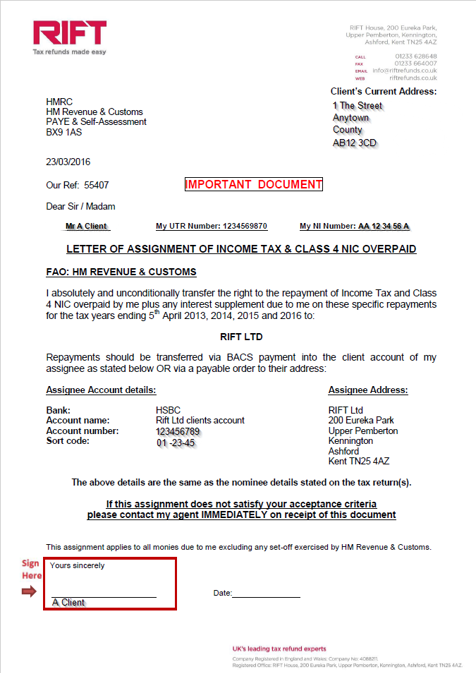
What should I do if I have assigned another company to receive my refund in the past but now want to switch to RIFT?
If you have signed a Letter of Assignment with another company then it is legally binding for the tax years listed on it unless both parties (you and the company you signed with) agree to "rescind" (remove their right to receive your tax refund from HMRC) that assignement.
This means that you need confirmation from the existing company that you used that says they have "rescinded their right" to receive the refund before either you or an alternative tax agent can receive any refunds due for those years.
Unfortunately we will not be able to offer our service until you have confirmation from them that the letter has been "rescinded".
How can I change the company I want to receive my refund for me?
You need to contact the company you used and ask them to confirm that they"rescind their right to receive any refunds of tax" on your behalf. As long as there are no outstanding fees to pay the company will usually agree right away.
However, we are aware that some people who want to use our services are finding it difficult to contact their previous supplier of tax services to do this and that in some instances there have even been outright refusals by those companies. In these situations we may be able to help you to contact the company and get it sorted out for you.
Is signing a letter of assignment the same as authorising an agent?
No, but you will need to do both for RIFT to claim your refund for you. You make a person or organisation your agent with HMRC by signing a form called Authorising Your Agent 64-8. Your agent is the person who deals with HMRC on your behalf and who prepares and submits your tax refund claim paperwork. For example if you are a RIFT customer then RIFT is your agent.
If you're waiting for your refund for longer than you expected then the usual cause is that we don't have one or both of these signed documents from you. Get in touch if you need to check and if you need new copies we can send them out to you.
Claiming a tax refund should not change your tax code. If your tax code changes, just let us know and we’ll make sure it’s right - it’s all part of our aftercare service and included in the price.
Your tax code represents the amount of money you can earn tax-free so it’s important that it’s correct. Who wants to pay too much tax? Or worse still, get a bill from the tax man because you haven’t paid enough?
Your tax code is used by your employer or pension provider to work out how much Income Tax to take from your pay or pension. The code is worked out by HMRC, who sends it to your employer or pension provider.
A higher tax code means you can earn more money before you start paying tax, so you’ll pay less tax over the year. However, tax refunds are hardly ever the same two years running, so if your claim is smaller, you won’t have paid enough tax and you’ll owe money to HMRC.
Your payslip should have your tax code on it. HMRC may tell your employer to use a higher tax code after you’ve claimed your tax refund because they assume you will be eligible for this tax relief next year – but you may not be. It all depends on how much travel you do.
A 1263L tax code tells your employer that you’ve got a slightly higher Personal Allowance than most people. In real terms, it means you’re able to earn a little more in each tax year before you start to pay Income Tax.
Many people are worried about tax codes because they sound much more difficult than they actually are but once you know what all the letters and numbers mean it's as easy as reading any other code.
Find out more about your tax code and how to check if it's right.
The simple answer is as soon as possible after the 5th April.
We complete your tax return online and this has to be submitted and paid before the 31st January the following year.
If you miss the deadline there are some pretty expensive penalties from HMRC, and they are very strict on what counts as a good reason for being late. Get your information into us as quickly as possible.
Another important deadline to note is that you should get yourself registered as self employed as soon as possible after you start trading. The deadline's the 5th of October in the year you started your self-employment. Miss that, and you're risking penalties based on the potential lost tax.
If you're self-employed, you'll need to file yearly Self Assessment tax returns to report your earnings and expenses to HMRC. However, there are several other reasons why you might need to file tax returns. For example:
The main thing to realise is that you can't afford to keep the taxman waiting if he's expecting a tax return from you. Even if you're sure it's a mistake, get in touch with RIFT. If there's a problem, we'll be able to help—even if you're already facing penalties for missing a deadline.
It takes a few weeks to put together a really comprehensive tax refund claim. As soon as you're happy to go forward, we'll send your claim to HMRC for approval. It can take 8-10 weeks for the taxman to check your details and confirm your refund total, so the sooner you get us the information we need the sooner you'll have your money.
The best way to speed up your RIFT Tax Refund is to get your Authorising your agent (64-8) form back to us fast. This is the form that lets us tackle the taxman on your behalf. Without 2 physical copies of your 64-8 document, HMRC won't even speak to us about your claim. It's annoying, but it's all about protecting you.
As soon as your refund's paid out, we'll either send you a cheque or pay it into your bank account if you prefer. The choice is yours.
Have a look at our 'How Long Does A Tax Refund Take' page for more information about how long it takes to get your tax refund done and some pointers for how to make things happen as fast as possible.
Remember that you can claim for the last 4 tax years and you can make your claim at any time.
In HMRC's language, a tax rebate is "a refund on taxes when the tax liability is less than the taxes paid". What it's definitely not is a prize or a dodgy way of ''cheating the system''. When you're owed a HMRC tax refund, it's because you've already paid too much tax.
When you're paying your own way to temporary workplaces, the odds are good that you're owed some tax back for your expenses. ''Temporary'' here just means it's somewhere you're working for less than 24 months on the trot. It's worth making sure you get back what you're owed, too. You can claim a tax rebate for up to 4 years, with an average 4-year rebate with RIFT coming to £3,000. This is based on average total claims data for a 4-year period. Refunds are subject to fees of 36%. Exclusions apply.
A lot of the time, people don't even realise how many of their day-to-day expenses qualify for tax relief. Unless you prove to HMRC what you're owed, though, the taxman won't have the information he needs to settle up. The tax rebate system's a little clunky in places, but RIFT's on-demand, 1-on-1 service means you'll never get lost or lose out.
Just answer a few simple questions and we can tell you whether it looks like the expenses you've had to pay out in the course of your work meant that you may have paid more tax than you should.
You can also use our tax refund calculator to see an estimate of how much you could be due if you make a claim.
Our standard charges are:
Don't worry if you had a mixture of self-employed and PAYE (employed by a company) work during the period you want to claim for. We can work out if you would be due a refund and let you know what the fee would be.
See our full list of services with prices and options.
When we receive your refund from HMRC we take out our fee and then pay you your refund. There are no up front charges to pay for anything. If you are not due a refund then there is no charge.
Before we send your claim to HMRC we send a copy to you with a full breakdown of all the fees so you can clearly see:
You will need to sign and send this back to us to say you have read, understood and agreed with it, along with a declaration that all the information you have provided about your claim is true. This means you will never be charged any fees you have not agreed to.
There are no further fees to pay, and no hidden charges.
All aftercare is included (if you need us to call HMRC on your behalf, if you have a problem you would like us to resolve with them, if your tax code needs correcting etc).
Your refund is covered by the unique RIFT Guarantee which means that whatever happens, your refund stays in your own pocket and will never go back to HMRC. If we fight any HMRC enquiries for you (which is included free of charge) and if they did demand any money back, we would pay back the refund to HMRC ourselves.
We will also send you a reminder when it's time to see if you have a claim next year.
You can reach us on the phone or Livechat
Mon-Fri: 8:30am – 6pm
Saturday & Sunday: Closed
You can email us or send us a question or feedback through our contact page at any time and you can leave us a private message through our Facebook page.
It's possible to claim for the last four tax years. That could add up to a substantial refund value.
Read our complete guide to claiming uniform tax refunds.
No, you cannot claim for PPE (Personal Protective Equipment). If your job requires you to use PPE your employer should either:
If you want to claim the exact amount spent then yes you will need a copy of your receipts. If you don't have receipts you can claim via flat rate expenses which allow you to claim tax relief for a standard amount (a flat rate) each tax year.
It can take between 8-12 weeks for HMRC to process your tax refund claim, depending on your personal circumstances.
Find out more about how long it takes to get your tax refund payment.
If you work in a kitchen, you're entitled to a range of tax reliefs on your unavoidable expenses. The things you can claim for depend on your circumstances. Your work clothes are a great example. If you're paying to clean, repair or replace your work clothing, you're entitled to a uniform tax rebate. This counts for your whites, your apron and anything else you're required to wear for work.
If you're responsible for supplying your own kitchen equipment, this can also qualify you for tax relief. Safety gear like non-slip shoes is a good example of an expense you can claim for. Essential utensils from knives to saucepans can also count if you're paying for them yourself.
Working in hairdressing takes a lot of specialised equipment. If you're paying for cleaning, repairing or replacing things like a uniform or tunic, you could qualify for tax relief. The key things to remember are that you have to be paying for the items yourself, and they must be essential to your work.
It doesn't stop with aprons and tunics, either. If you have to provide your own scissors, combs, hairdryers or clippers, you could have a claim. Whatever essentials of the trade you've shelled out for personally could go toward clawing back your tax refund from HMRC. Even if the individual costs are small, they still add up over time.
Mechanics face a lot of unavoidable expenses just to do their job. You've almost certainly got specialised clothing, and maybe even a uniform to take care of. If you're paying for laundry and upkeep of your work clothes, you could well be in line for a tax refund.
It doesn't stop there. Are you buying, repairing or replacing your tools out of your own pocket? What about your safety gear? Expenses like these are essential to your work, so HMRC says you can claim tax relief on them. Everything from a spark plug to a socket set could go toward your tax refund, so don't miss out!
Uniformed police officers know how tough the job can be on their work clothing. Luckily, the taxman knows it too and is willing to help out. If you're paying for the laundry and upkeep of your police uniform, you're entitled to a tax refund on your costs. In fact, the flat rate allowance for police is one of the more generous ones. Even if you don't typically wear a uniform on duty, you may still be entitled to claim the allowance.
Your tax refund isn't limited to just your essential work clothes, either. You could also qualify for tax relief on things like your Police Federation subscriptions. One quick note of caution is that some police forces have their own arrangements about claiming tax rebates for you. Check what your situation is before making a claim on your own.
A job in security can mean a lot of out-of-pocket expenses. HMRC rules mean you can claim tax relief for some of your unavoidable work costs. For example, if you're responsible for the cleaning and upkeep of your uniform, you can claim cash back from the taxman. This also counts for any protective clothing or equipment you're required to wear or use.
If you're shelling out for your own Security Industry Authority licences, you can claw even more cash back from HMRC. Depending on your duties, you may have paid for several SIA licences. It all counts toward your tax refund, so make sure you keep track of what you've spent on licences for:
Working aboard a commercial aircraft doesn't have to leave your taxes up in the air. Both pilots and air cabin crew can claim a range of tax reliefs on the necessary costs of the job. For a lot of people, that's going to start with their uniforms. Paying from your own pocket for laundry, repair or replacement of your work clothes qualifies you for a tax refund.
That's not the end of it, though. The rules agreed with the British Airline Pilots Association (BALPA) also cover a few essential pieces of kit. Sunglasses are included, as are things like flight cases, passports and even some training costs. Beyond the flat rate allowance, you may also be able to include other necessary expenses in your tax refund claim. For example, your BALPA subscriptions qualify, so always keep track of what you're spending just to do your job.
You don't have to be a pilot to claim a tax refund. Air cabin and flight deck crew can also get tax relief on a range of work expenses. Again, uniform laundry and upkeep is an obvious example, but there are plenty more. Visas and vaccination costs are covered by the system, and even small costs can add up over time to a surprisingly large tax refund.
Keep in mind that some airlines have their own arrangements for uniform and equipment allowances. These may differ from the HMRC amounts, so make sure you know what allowances apply to you.
If you're a teacher, there are a few easily missed work expenses that could earn you a tax refund from HMRC. In general, these are for unavoidable costs that allow you to do your job. For example, if your work requires you to wear specific clothing, you can claim back tax on its laundry and upkeep. Sports clothing for P.E. teachers might be an obvious example, or any protective gear needed in a science or metalworking class. The basic rule is that, if it's necessary and you're paying for it yourself, it could qualify for tax relief.
Another area where teachers tend to miss out is subscription fees for professional bodies. Union subscriptions to organisations like the National Union of Teachers or for Institute for Learning fees all count.
As a lorry driver, you might be surprised at the out-of-pocket costs that count toward your tax refund claim. You might not think of the jumper you wear for work as a "uniform", but if it carries a company logo you might be owed some tax back. The same is true for any protective clothing or safety gear you need for your work. A high-vis jacket, for example, will often qualify as a work expense.
It goes way beyond just the clothes on your back, too. HMRC's tax rebate system is about making sure you don't suffer because of unavoidable work costs. It's still pretty easy to lose out, though. Some expense claims, like food and accommodation bills, might require some paperwork to back them up. You probably won't need to keep obsessive records, but any receipts you hang onto will help to put money back in your pocket.
Other easily missed refunds for lorry drivers include any medical examinations you have to take for your licence. Remember that the licences themselves entitle you to tax relief, whether for their issue or renewal fees. If you're paying for your digital tachograph smartcards yourself, make a note of what you're spending. It all counts toward your yearly tax refund from HMRC.
Like many other professions, workers in the gambling industry can claim a tax refund for some of their unavoidable costs. One major area that many miss out on is the uniform tax rebate. If you're required to wear a uniform for work and are paying for its laundry or upkeep yourself, you can make a claim.
Beyond your clothes, working in the gambling industry does come with few necessary expenses. Depending on your job, you might need to pay for a Personal Functional licence. This is particularly true if you have to handle cash in your work. If you pay for the licence yourself, then the fees can form part of your yearly tax refund claim.
Security staff are hugely important to the industry, and have a range of specific licences that apply to them. Security Industry Authority licences range from door supervision to the protection of cash and valuables in transit. However, the one thing they have in common is that they all qualify for tax relief.
When you set up a Limited Company, you have to submit annual accounts to Companies House and a company tax return to HMRC using a CT600 form to calculate your corporation tax. The period covered by your tax return can’t be longer than 12 months, so if you’ve been trading for longer than that you may have to file two tax returns to cover the period of your first accounts. If you do, you’ll also have two payment deadlines. In the following years, you’ll usually only file one tax return.
There's a lot of paperwork involved in being a company director. You should obviously keep all your P45, P60 and P11D documents, but that's not all. Taxed award schemes, redundancy payments and a whole range of benefits all come with records to hold onto. You should also remember to keep track of any essential expenses you've had. You might be able to use them to bring down the tax you owe.
HMRC will expect you to tell them about any benefits you've received, whether that's Jobseeker's Allowance, Sick Pay or Statutory Maternity Pay. You should also record any income or other benefits you've had from things like employee share schemes. It's all part of the big-picture overview of your finances that the taxman wants to see.
A Limited Company has to file a few different kinds of paperwork to stay in business. One of the most obvious is your Company Tax Return. This is how your Corporation Tax is worked out, and mostly has to do with the profits or losses you made. One thing to keep in mind is that this is separate from your annual return or "confirmation statement". An annual statement is a yearly check that all the conformation Companies House holds about your company is correct.
Finally, you'll need to file your personal Self Assessment tax return as a director of the company. Self Assessment returns work out how much tax you owe personally, and again are separate from your company's return.
If you decide to sell your business, some of its assets, or your share in it then make sure you claim your Business Asset Disposal Relief (previously known as Entrepreneurs’ Relief) which allows you to pay a reduced Capital Gains Tax rate and maximise your profits when you sell up
When you're in a partnership, you've got two Self Assessment registrations to make – one for you and one for the business itself. One of the partners has to be in charge of the business' tax records (the “nominated partner”). If that's you, it means you have to register the partnership for Self Assessment and deal with all its tax paperwork. Like a person, the partnership will get a Unique Taxpayer Reference number to use when filing its tax returns.
As a partner, you'll also have to register for the system yourself. Again, though, the basic rules and deadlines are the same. If your business is a Limited Liability Partnership, of if the “partner” you're registering is itself a company, then special rules apply.
If you decide to sell your business, your share in it, or some of its assets, then you may need to declare any capital gains from the sale to HMRC and claim Business Asset Disposal Relief (previously known as Entrepreneurs’ Relief) on the tax due.
When you let out a property, HMRC wants to hear about the money you're making. To declare what you've got coming in, you need to register for Self Assessment Tax Returns. Even if you don't think of yourself as being a self-employed landlord, the taxman will still come sniffing around your rental income.
Under the Self Assessment system, you fill in a form (usually online) to tell HMRC what money you've made. However, the taxman's only really interested in your profits. Because of that, you also show him what you've spent on renting the property out. These necessary costs bring down the amount of profit you're paying tax on.
Getting set up for Self Assessment can take a while, so it's best to do it early. You'll have to give some basic information, and hit strict deadlines for submitting returns and paying what you owe. It can be hectic, if you're not used to the system, but keeping good records and getting professional help make all the difference.
The way you pay tax on your rental income depends on how much you've got coming in. If it's between £2,500 and £9,999 a year after expenses, you'll need to file a Self Assessment tax return. You'll also need to file a return if you're making over £10,000 before expenses.
If you're below these limits, you probably won't need to register for Self Assessment, meaning you'll be taxed via PAYE instead. You'll need a P810 form from HMRC to declare the money you're making.
All your income is taxed at your normal rate, regardless of where it comes from. However, there are ways to bring down the amount of tax you owe. The government's Rent a Room scheme is a good example. Under this scheme, landlords letting out a furnished room in their own home can earn up to £7,500 per year tax-free. You don't need to do anything to claim this tax relief, other than opt into the scheme. However, you'll still need to file a Self Assessment return to pay tax on anything you make over the £7,500 threshold.
If your come to sell your rental property you will need to pay Capital Gains tax on the profits from the sale.
Depending on who you listen to, the new “gig economy” is either the pinnacle of self-employment freedom or a massive scam at the expense of workers and HMRC. Employment law and tax regulations have been tying themselves up in knots trying to keep pace with it. With potentially billions of pounds in the balance, it's not hard to see why. The way the UK works is changing rapidly, and the taxman's old tools are looking blunter every day.
In the gig economy, companies hire staff as independent contractors for what are usually short-term jobs. Those workers are paid by the “gig”, rather than on a regular schedule. On the one hand, it's a flexible way to work that suits a lot of people. On the other, you really don't have any guarantees to fall back on. Many gig economy workers end up putting in the equivalent of full-time hours. However, since they aren't employees, they get no job security and miss out on some important rights.
In the UK, employees of a business can generally expect sick pay, parental leave and a guaranteed minimum wage. These are all basic cornerstones of employment law. By treating everyone as an independent contractor, gig economy jobs tend to dodge all those fundamental rights. Given that we're talking about somewhere approaching 16% of the total UK workforce, that's a lot of people working without the security and safeguards that protect more traditional workers.
When you work from gig to gig, you're responsible for paying your own tax and National Insurance. That means registering for HMRC's Self Assessment system and filing yearly tax returns. There's been a lot of fuss kicked up by the taxman over the gig economy in recent years. Basically, HMRC believes that there's significant “bogus self-employment” going on in the UK. Billions of pounds' worth, in fact - and they're cracking down hard to put a stop to it. False self employment essentially means that a company is avoiding its responsibilities to its workforce and HMRC by declaring employees to be contractors. This can be a pretty complicated legal knot to untangle, particularly with agencies, umbrella companies and Personal Service Companies to consider.
The legislation is badly out of date when it comes to dealing with the gig economy, and HMRC employment status challenges can be a nightmare for everyone. There are new rules apparently on the way to shift the balance more in favour of workers and generally tidy up the system. For now, though, the taxman's definitely paying attention.
If you’re making over £100,000 a year, you have to file an annual Self Assessment tax return with HMRC. If you don’t usually send a tax return, you need to register by 5th October following the tax year you had the income. We can help you avoid any tax return penalties and handle everything for you.
Basically, when you're a "high earner", HMRC wants to take a closer look at your money. You may well be in a more complex position than most, with more than one source of income to consider. Getting it all properly accounted for means filing a yearly Self Assessment tax return.
Another reason the taxman will ask high earners for a tax return is because it can affect your tax-free Personal Allowance. It comes down what HMRC calls to your "adjusted net income". This figure doesn't take your Personal Allowance into account, but does include a few kinds of tax relief. The basic idea is that you lose £1 of your tax-free Personal Allowance for every £2 over £100,000 your adjusted net income goes. This can get complicated quickly, of course - which is why HMRC needs a tax return to sort it all out.

06th October 2026
Tax and Starting Your First Job
Starting your first job usually means seeing PAYE Income Tax, National Insurance and a tax code on your payslip for t...
Read More