How Earning Over 100k Affects Your Personal Allowance

Reviewed by Finance Director, Jason Scrivens-Waghorn (FCCA)

Reviewed by Jason Scrivens-Waghorn (FCCA) Jason Scrivens-Waghorn (FCCA) LinkedIn
Jason is the Head of Finance at RIFT, where he's been steering the financial ship for over 11 years. His role is all about ensuring smooth operations, from making sure customers are paid quickly an...
Read More about Jason Scrivens-Waghorn (FCCA)What's it all about?
This article's designed to help you:
- Understand how higher tax can affect your salary
- Be more tax efficient with your money
- Plan for changes to your tax bracket
You can also read our UK Tax Tips For High Earners to learn more about how to make the most of your money.
Tax is a hot topic for individuals and businesses alike. As much as we’d all love to take home our entire paycheck each month, the task gets a tad trickier the more you start to earn. Thankfully we’ve streamlined everything you should know, to help make the most out of your money.
Tax brackets and personal allowance
First off, tax brackets or tax rates are the present amounts that you can earn before being charged an extra percentage of your income. Most of us are given a personal allowance which is basically an amount that we can earn before paying any tax. For the current tax year 22/23, this personal allowance sits at £12,570. So say your total income is £20,000, you can sleep soundly at night knowing that £12,570 of this won’t be touched by the taxman.
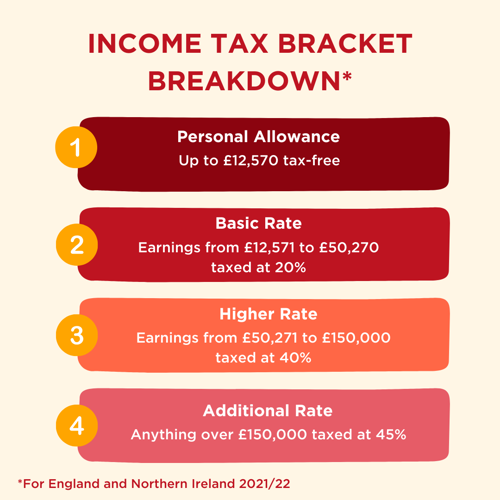
Depending on what you earn over your personal allowance will determine what rate your salary will be charged. To make it easier, we’ve outlined the different rates for whatever you earn on an annual basis. If you’re based in Scotland then this can vary from the rest of the UK and can be checked on Gov.uk.
Your personal allowance after tax
Even though the table contains the tax rates for each income, it leaves out two crucial points for those earning over £100k in a year. For every £1 that you earn above this amount, your personal allowance will reduce by £2 until it’s gone. Once you hit the £125,140 mark your allowance will automatically be set to £0 meaning that you’ll have to pay tax on everything you earn.
In real terms, anyone caught between £100k and £120k can actually be paying a whopping 60% in tax. You may earn £100k a year but with a bonus of £1,000 your total income is taken to £101k. That additional £1,000 will not only be taxed at 40% but will also knock £500 off your tax free personal allowance. This removal of £500 from tax will be charged at another 40%, leaving you with a meagre £400 from your £1000 bonus.
As you can see, even if you think you’ve got breathing space before hitting this threshold, it’s best to check if you’re inline for any big bonuses or commission before the end of the tax year. Many people don’t notice until they receive their tax slip and it’s too late to act.
Stop overpaying tax! Millions of pounds in tax refunds go unclaimed every year because people don't realise they're owed money.
Alternatives to paying 60% tax
Although there is no way of avoiding this 60% tax for £100k-£120k earners, there are ways to manage your income so that you can still make some changes to become more tax efficient. Pensions, workplace benefits, and charitable donations are all great ways to help you reduce your earnings to below £100k and prevent any reduction in personal allowance.
One route you could take is to use your pension contributions to take you under the £100k barrier. You’d essentially be sending some of the money that would’ve been heavily taxed to your retirement pot. Although you’d be taking home less money each month, you’d still be more wealthy overall because of the break in tax and the hefty pension waiting for you. It’s worth noting that you can only deposit a maximum of £40,000 a year.
Now if a pay rise is on the cards, you may want to check out what benefits your company offers as a trade off. Things like company cars and private healthcare can often make your life more comfortable without having to jump over the £100k barrier. These are usually given through a “salary sacrifice” scheme so it’s definitely worth asking about if you’re in line for an annual review.
RIFT Roundup: what's it all mean?
- Personal Allowance: An amount of money that you can earn before tax is owed to HMRC. Currently set at £12,570 in the UK excluding Scotland but starts to reduce once you earn over £100k a year. Removed completely if you earn over £125k.
- Tax Rate: The percentage of your total payslip that goes to HMRC according to your annual earnings.
- 60% Tax: A tax that occurs when you earn between £100k and £120k when you’re charged higher rate tax and also receive a reduction in your personal allowance.
- Pension: A retirement savings plan that allows you to reduce your tax burden. Save up to £40,000 a year and up to £1.073m in your lifetime.
Free tax refund checker: Our tax rebate calculator will give you an instant estimate of how much tax you could be owed back from HMRC
Start Now